The Hidden Connection Between Open Slots, No-Shows, Patient Retention, and AI at FQHCs
Federally Qualified Health Centers are under pressure from every direction. Demand for accessible care remains high, yet many health centers are still asking the same difficult questions:
- Why do we have so many open appointment slots?
- Why are our no-show rates still too high?
- Why aren’t more patients coming back?
- Why is our staff spending so much time on phones and repetitive tasks?
- How do we grow insured patient volume?
- And what should we actually be doing with AI?
On the surface, these may look like separate challenges — scheduling, patient engagement, staffing, growth, and technology. In practice, they’re often connected by one underlying issue: friction in the patient journey.
Key takeaways
- Open slots, no-shows, and weak retention at FQHCs usually trace back to one root cause: friction in the patient journey, not a lack of demand.
- Reminders alone don’t fix no-shows — patients need an easy way to confirm, cancel, or reschedule without a live phone call.
- Retention depends on what happens between visits: consistent follow-up, recalls, and referral tracking.
- AI should target a specific, measurable source of friction — not launch as a general innovation initiative.
- A connected patient-access platform can address scheduling, communication, referrals, and follow-up as one system instead of five separate fixes.
Every day, patients are trying to find care, schedule appointments, get questions answered, reschedule, follow up, and understand what to do next. When any of those steps are harder than they need to be, some patients never schedule. Some miss their appointments. Some seek care elsewhere. Others simply fall out of the system.
Staff then have to compensate with more phone calls, more manual outreach, more voicemails, and more work queues. Multiply that friction across hundreds or thousands of patients, and it begins to affect provider utilization, patient volume, workforce capacity, continuity of care, and revenue.
That’s why patient experience is no longer only a satisfaction issue for FQHCs. It’s an access, growth, operational, and financial sustainability issue — and it’s where a connected patient-access platform such as ReferralMD can make a meaningful difference.
Why Open Slots Are an Access Problem, Not a Demand Problem
An open appointment slot doesn’t always mean there are too few patients. It may mean the process of converting patient demand into a completed visit is breaking down.
A patient may call while the health center is closed. They may abandon the call after waiting on hold. They may leave a voicemail and miss the return call. They may not know which location, provider, or appointment type to select. If they can’t easily find a suitable time, they may postpone care or turn elsewhere.
At the same time, cancellations may occur too late for staff to refill the opening. Schedules can appear full days in advance and still contain unused capacity when the appointment date arrives.
ReferralMD can help health centers create a more accessible path to care through digital scheduling, automated patient communication, and coordinated intake workflows. By allowing patients to take action outside traditional phone hours — and by helping teams respond more consistently — FQHCs can reduce avoidable friction between patient intent and a booked appointment.
The goal isn’t simply to “put scheduling online.” It’s to make available capacity easier to discover, book, confirm, reschedule, and refill.
Why No-Show Rates Stay High — and Why Reminders Alone Don’t Fix It
No-shows are frequently treated as a reminder problem. Reminders matter, but they’re only one part of the picture.
Patients may miss appointments because they forgot, couldn’t arrange transportation, didn’t understand the instructions, no longer needed the visit, or couldn’t find an easy way to reschedule. In many cases, the health center doesn’t learn about the barrier until the appointment time has passed.
A stronger approach combines timely outreach with an easy way for patients to respond. ReferralMD can support automated confirmations, reminders, and follow-up communications across digital channels, helping patients confirm, cancel, or reschedule without relying entirely on a live phone conversation.
That creates value on both sides. Patients receive clearer guidance and more convenient options. Staff gain earlier visibility into cancellations and may have more time to offer the slot to another patient.
Technology can’t eliminate every no-show. Transportation, work schedules, housing instability, caregiving responsibilities, and other social factors remain real barriers. But better communication and simpler self-service can help prevent administrative friction from becoming one more reason a patient misses care.
What Drives Patient Retention Between Visits
Patients don’t experience a health center only while they’re in an exam room. They experience it when they search for care, call the front desk, receive a reminder, wait for an answer, complete a referral, and try to schedule their next visit.
If follow-up is inconsistent or the next step is unclear, patients may not return — even when they need ongoing care.
ReferralMD can help FQHCs build more reliable follow-up workflows by automating outreach for recalls, preventive care, care gaps, missed visits, referral follow-up, and other next-step communications. Instead of depending exclusively on staff to remember, call, document, and retry every patient manually, the organization can establish repeatable engagement processes.
This is especially important for health centers managing large patient panels. A reliable outreach system can help teams maintain continuity at scale while reserving staff attention for patients who need personal assistance.
Retention, in this context, isn’t about marketing to patients. It’s about making it easier for them to continue receiving the care they need.
Where Staff Capacity Is Being Consumed by Repetitive Coordination
FQHC teams often perform a remarkable amount of invisible work: answering routine questions, confirming appointments, calling patients who didn’t respond, processing referral information, checking status, rescheduling visits, and documenting each interaction.
These tasks are necessary, but many don’t require a staff member to start from scratch every time.
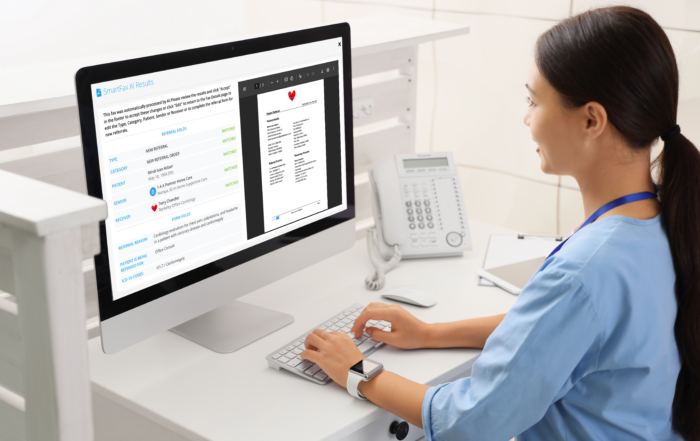
ReferralMD can help automate and standardize portions of this work, including appointment communication, digital intake, referral coordination, outreach, and patient responses. This doesn’t remove people from the care experience — it can reduce the repetitive administrative burden that keeps staff from focusing on higher-value conversations, complex cases, and patients who need human support.
For leaders, the relevant question isn’t “How many tasks can we automate?” It’s “Where is manual work preventing our team from operating at the top of its ability?”
The best automation targets are usually high-volume, rules-based, repetitive, and measurable — sending confirmations, collecting standard information, prompting a patient to take a next step, routing a request, or escalating an exception to the right team member.
How Easier Access Grows Insured Patient Volume
FQHCs serve patients regardless of their ability to pay. Growing insured patient volume doesn’t change that mission — it can help strengthen the financial base that supports it.
Insured patients, like all patients, often judge access by convenience and responsiveness. They may compare how quickly they can find information, schedule care, get a question answered, or complete a follow-up step. If the experience is difficult, they may choose another provider — even if the FQHC offers high-quality, comprehensive care.
A modern digital front door can help an FQHC compete on access while preserving its community-centered model. ReferralMD can support a more convenient experience through online scheduling, digital engagement, coordinated referrals, and consistent follow-up.
It can also help health centers make better use of existing demand. Improving conversion from inquiry to appointment, reducing preventable schedule leakage, and bringing established patients back for appropriate care may be more efficient than relying only on new-patient acquisition.
The key is to treat growth as a patient-journey discipline. Outreach may create awareness, but a clear and responsive access experience helps convert that interest into care.
What Should FQHCs Actually Do With AI?
AI shouldn’t begin as a broad innovation initiative in search of a problem. It should begin with a specific source of friction — for example:
- Patients can’t get timely answers to routine questions.
- Staff spend hours handling repetitive scheduling requests.
- Referral queues require too much manual review and follow-up.
- Outreach is inconsistent because teams don’t have enough capacity.
- Leaders can’t easily identify where patients are dropping out of the journey.
Applied carefully, AI can help interpret patient requests, support conversational interactions, route work, prioritize follow-up, summarize information, and identify patterns that may be difficult to see manually. Within a platform such as ReferralMD, AI and automation can help make access and coordination more responsive and scalable.
But responsible adoption matters. FQHC leaders should evaluate each use case for privacy, security, accuracy, bias, accessibility, patient consent, staff oversight, and integration with existing workflows. AI shouldn’t make unsupervised clinical decisions or create a new layer of complexity for already-burdened teams.
Four questions for a practical AI strategy
- What patient or staff problem are we solving?
- Which part of the workflow can be safely automated or assisted?
- When should the process escalate to a person?
- How will we measure whether the change actually helped?
Useful measures may include call volume, abandonment, time to appointment, booking conversion, confirmation rates, no-show rates, referral completion, patient return rates, staff time saved, schedule utilization, and payer mix. The right metrics will vary by health center, but the principle is the same: AI should produce a visible operational or patient benefit.
A More Connected Strategy for Sustainable Growth
The questions FQHC leaders are asking are connected. Open slots may reflect access friction. No-shows may reflect communication and rescheduling barriers. Weak retention may reflect inconsistent follow-up. Staff overload may reflect processes that rely too heavily on phones and manual work. Payer-mix challenges may be intensified by a patient experience that’s less convenient than competing options. Unfocused AI projects may consume resources without improving any of them.
ReferralMD offers FQHCs an opportunity to address these issues as parts of one connected patient journey rather than as isolated operational problems. By combining digital access, patient engagement, referral management, workflow automation, and AI-assisted capabilities, health centers can build a more responsive system around both patients and staff.
The result will differ by organization, and technology alone isn’t a cure-all. Success also requires clear workflows, staff participation, leadership alignment, patient-centered design, and disciplined measurement.
But the opportunity is significant: make it easier for patients to enter care, easier for them to stay connected, and easier for staff to keep the process moving. For FQHCs, that can mean better use of provider capacity, more consistent continuity of care, less avoidable administrative work, and a stronger foundation for sustainable growth.
Frequently Asked Questions
Why do FQHCs have so many open appointment slots?
Open slots usually reflect an access problem rather than a demand problem. Patients may call when the office is closed, abandon calls on hold, or be unable to find the right appointment type — and late cancellations often can’t be refilled in time. Digital scheduling and automated communication help close that gap.
How can FQHCs reduce patient no-show rates?
Reminders alone rarely solve no-shows. A stronger approach pairs timely outreach with an easy way for patients to confirm, cancel, or reschedule without calling — giving staff earlier visibility into openings so they can be refilled.
What drives patient retention at community health centers?
Retention depends on what happens between visits — consistent follow-up for recalls, preventive care, care gaps, and referrals. When the next step is unclear or follow-up is inconsistent, patients may not return even when they need ongoing care.
How does automation help FQHC staff capacity?
Automation can standardize high-volume, rules-based, repetitive work — confirmations, intake, routing, and outreach — freeing staff to focus on complex cases and patients who need direct human support, rather than removing people from the care experience.
What’s the right way for an FQHC to approach AI adoption?
Start with a specific, measurable source of friction rather than a general innovation initiative. Evaluate each use case for privacy, security, accuracy, bias, accessibility, and staff oversight, and define upfront when a process should escalate to a person.
How does ReferralMD support FQHC patient access?
ReferralMD connects digital scheduling, patient engagement, referral management, workflow automation, and AI-assisted capabilities into one system — addressing open slots, no-shows, retention, and staff capacity as parts of a single patient journey instead of separate fixes.
Ready to explore what a more connected patient journey could look like for your health center?
Related Posts

Subscribe to Our Blog
Recent Posts