Healthcare gadgets have moved well beyond step counters. Today’s connected devices can capture heart rhythm, glucose, blood pressure, oxygen saturation, sleep patterns and other health information from nearly anywhere. The most useful tools do more than display a number: they help patients and care teams recognize when attention may be needed and support the next step in care.
But a device alone does not schedule an appointment, route a referral or confirm that a patient received care. The real value appears when reliable health information connects to a coordinated workflow.
Quick answer
The most important healthcare gadgets in 2026 include wearable ECG monitors, continuous glucose monitors, connected blood pressure cuffs, pulse oximeters, smart scales, sleep-monitoring devices, connected inhalers, medication-management devices, hearing technology and at-home diagnostic tools. For healthcare organizations, the key question is not only what a device measures, but how its information leads to review, outreach, referral, scheduling and documented follow-up.
This article is educational and does not provide medical advice. Consumer wellness devices and FDA-regulated medical devices are not interchangeable. Patients should discuss symptoms, results and device selection with a qualified healthcare professional.
What are healthcare gadgets?
Healthcare gadgets are connected or sensor-enabled devices used to measure, monitor or support a person’s health. Some are consumer wellness products. Others meet the definition of a medical device and may be used in clinical care or remote patient monitoring.
The distinction matters. The U.S. Food and Drug Administration provides guidance for digital health technologies, including device software, sensor-based technologies, cybersecurity and artificial intelligence. When a device will inform clinical decisions, organizations should evaluate its intended use, regulatory status, accuracy, security and ability to fit into existing clinical systems.
10 healthcare gadgets shaping patient care in 2026
1. Wearable ECG and heart-rhythm monitors
Wearable electrocardiogram technology can capture a brief heart-rhythm recording from a watch, patch or handheld sensor. Depending on the device and intended use, the result may be stored in an app or shared with a clinician for review.
Why it matters: Wearable ECG tools can make it easier to capture information during intermittent symptoms. They do not replace a clinical evaluation, but they may give a care team useful context when deciding whether further assessment is appropriate.
2. Continuous glucose monitors
Continuous glucose monitors use a small sensor to measure glucose levels throughout the day and night. They can show current readings, trends and alerts without requiring a traditional finger-stick for every measurement.
Why it matters: Trend data can help eligible patients and their clinicians understand patterns that a single reading may miss. A successful program still needs patient education, a defined review process and a clear response when readings require attention.
3. Connected blood pressure cuffs
A connected blood pressure cuff records readings and transmits them to an app or monitoring platform. These devices are among the most familiar examples of remote patient monitoring.
Why it matters: Home readings may provide a broader view than a measurement taken during a single office visit. CMS describes remote patient monitoring as the collection of patient health data—such as blood pressure, weight or glucose—through a connected medical device that transmits the data to a healthcare provider for treatment or management. Learn more from the CMS remote patient monitoring overview.
4. Connected pulse oximeters
Pulse oximeters estimate blood oxygen saturation and pulse rate. Connected versions can store or transmit readings, making them potentially useful in structured monitoring programs for appropriate patients.
Why it matters: A measurement becomes more useful when the care team knows who is responsible for reviewing it, what thresholds require action and how the patient will be contacted. Device readings should always be interpreted in the appropriate clinical context.
5. Smart scales and connected weight monitors
Smart scales automatically record and share weight data. Some consumer models also estimate body composition, while clinical programs may focus on weight changes over time.
Why it matters: Trends can support chronic-care and post-discharge monitoring when paired with an established care plan. The operational challenge is making sure an important change does not sit unnoticed in a separate dashboard.
Collecting data is only the first step
ReferralMD helps healthcare organizations turn the next steps into a coordinated workflow—capturing referrals, routing work, engaging patients, scheduling care and tracking outcomes across the network.
6. Sleep-monitoring devices
Wearables, bedside sensors and specialized home testing devices can collect information about sleep duration, movement, heart rate or breathing. Consumer sleep scores can support awareness, while diagnostic questions require appropriate clinical testing and interpretation.
Why it matters: Sleep technology may prompt a patient to seek help, but the path from concern to care often involves an evaluation, a referral to a specialist, testing and follow-up. Each handoff needs to be visible and coordinated.
7. Connected inhalers and respiratory monitors
Connected inhaler sensors can record when an inhaler is used, while other respiratory devices may track measures such as airflow or symptoms. These tools may support a care plan when selected and managed by the appropriate clinical team.
Why it matters: Usage patterns can help a clinician discuss adherence, technique or possible triggers. The device is most useful when information can reach the right team and lead to timely communication or escalation.
8. Smart medication-management devices
Connected pill dispensers, reminder systems and smart packaging are designed to help patients follow medication schedules. Features may include audible alerts, caregiver notifications and a record of when a compartment was opened.
Why it matters: Reminders can reduce friction, but technology should account for accessibility, patient preference and the fact that opening a dispenser does not confirm that a medication was taken correctly.
9. Modern hearing technology
Today’s hearing devices may offer app-based adjustments, directional audio, rechargeable batteries and wireless connections. Some consumer products can improve access for adults with perceived mild-to-moderate hearing loss, while other needs call for evaluation by a hearing professional.
Why it matters: Hearing affects communication throughout the patient journey—from understanding phone instructions to completing intake and following a care plan. Digital access strategies should provide alternatives that meet different patient needs.
10. At-home diagnostic and screening tools
At-home tools now support a growing range of measurements and sample collection. Depending on the test, a patient may receive a result at home or send a sample to a laboratory.
Why it matters: A result is not the end of the journey. Patients may still need interpretation, additional testing, a referral or a scheduled appointment. Organizations should design the follow-up process before deploying the technology.
What healthcare organizations should evaluate before adopting a device
A compelling gadget can still add work if it operates outside the systems staff use every day. Before adoption, healthcare leaders should ask:
- Clinical purpose: What decision or care process will the device support?
- Regulatory status: Is it a wellness product or a medical device for the intended use?
- Accuracy and usability: Can the intended population use it correctly and consistently?
- Privacy and security: How are data collected, transmitted, stored and accessed?
- Interoperability: Can relevant information reach the EHR, practice management system or operational platform?
- Workflow ownership: Who reviews incoming information, and how quickly?
- Action path: What happens when a patient needs outreach, a referral, an appointment or escalation?
- Equity and access: Is there a workable option for patients without a compatible smartphone, reliable internet or high digital confidence?
- Outcome measurement: Will the organization track response time, scheduling completion, referral closure, patient engagement and staff workload?
The missing link: turning a signal into completed care
Healthcare devices are getting better at generating signals. Healthcare organizations still need an operational layer that turns those signals into completed action.
Consider what happens when a device or home test indicates that a patient may need additional care:
- A care team reviews the information in context.
- The patient receives outreach and clear next-step instructions.
- A referral is created and routed to an appropriate provider.
- Required records and intake information are collected.
- An appointment is offered and booked.
- The referring and receiving teams can see status updates.
- The organization confirms that care occurred and closes the loop.
If those steps rely on disconnected inboxes, phone calls, spreadsheets and faxes, even excellent device technology can leave the patient waiting.
How ReferralMD supports the workflow around connected care
ReferralMD is a referral operating platform for healthcare organizations and practices. It connects the administrative steps that occur before, during and after an appointment so teams can move patients from an identified need to completed care.
- Referral management: Centralize inbound and outbound referrals, apply routing rules, track status and close the loop.
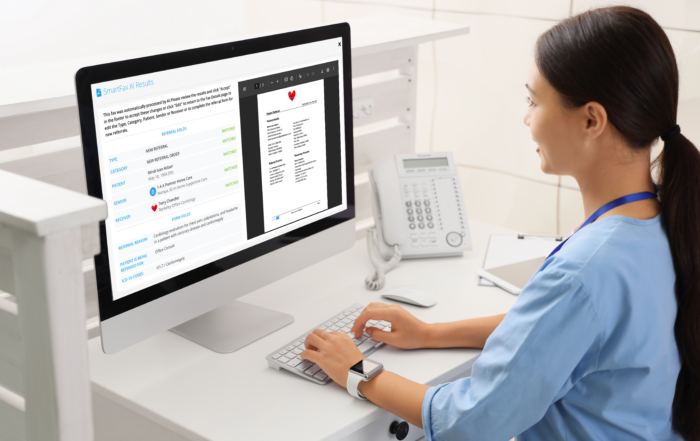
- AI fax management: Extract and route information from healthcare faxes instead of relying on manual entry.
- Digital patient intake: Collect forms, consent and needed information before the visit.
- Patient scheduling: Use real-time availability and organization-defined rules to support appointment booking.
- Voice AI and automation: Automate scheduling conversations and repetitive administrative work.
- SmartEXCHANGE integrations: Connect ReferralMD with EHR, PMS, RIS and other healthcare systems using APIs, HL7, FHIR, Direct and other supported methods.
Make the next step easier for patients and staff
Individual practices can start with ReferralMD’s free referral-management option. Health systems and networks can explore an enterprise deployment built around their workflows and integrations.
Frequently asked questions about healthcare gadgets
What is the difference between a wellness gadget and a medical device?
A general wellness gadget is typically intended to support a healthy lifestyle without diagnosing or treating a condition. A medical device has a defined medical purpose and may be subject to FDA oversight based on its intended use and risk. Buyers should verify the claims and regulatory status of a specific product rather than assuming every wearable or health app is clinically validated.
What are examples of remote patient monitoring devices?
Common examples include connected blood pressure cuffs, weight scales, glucose monitors and pulse oximeters. In a clinical remote patient monitoring program, the device transmits health information to a healthcare provider for review and management.
Can healthcare gadgets replace a doctor?
No. A device can collect information, support monitoring or make certain tasks easier, but it cannot replace a qualified professional’s evaluation or an organization’s responsibility to coordinate appropriate care.
How do healthcare devices connect with clinical workflows?
Depending on the device and system, information may move through an app, device platform, application programming interface or EHR integration. Organizations also need defined workflows for review, patient communication, referral, scheduling and escalation. Technical connectivity without operational ownership can still leave gaps.
What should a healthcare organization look for in connected technology?
Evaluate clinical purpose, regulatory status, accuracy, usability, privacy, cybersecurity, interoperability, accessibility, staff workload and the response workflow. The best technology is not simply the device with the most features; it is the solution the organization can use safely and consistently to improve care.
Final takeaway
The most promising healthcare gadgets of 2026 make health information easier to collect and share. Their impact, however, depends on what happens next. When device data is connected to timely outreach, referral management, scheduling, intake and closed-loop follow-up, technology can support a more coordinated patient journey.
Related Posts


Subscribe to Our Blog
Recent Posts