Healthcare Interoperability That Works: Moving Beyond Data Exchange to Better Referral Workflows
Healthcare organizations have invested heavily in electronic health records, practice management systems, scheduling platforms, radiology systems, analytics tools, and patient engagement technology. Yet many care teams still rely on duplicate data entry, manual status checks, phone calls, faxes, and disconnected workflows to coordinate referrals.
The problem is not always a lack of technology. It is often a lack of operational interoperability.
Healthcare interoperability should do more than move information from one system to another. It should make that information usable within the workflows that help patients move from referral to scheduled appointment, consultation, follow-up, and completed care.
That is the purpose behind ReferralMD SmartEXCHANGE: connecting healthcare systems while translating exchanged data into coordinated, automated action.
Key takeaways
- Healthcare interoperability means systems can access, exchange, interpret, and use health data — not just transmit it.
- ReferralMD’s SmartEXCHANGE platform works in three stages: exchange, translate, and utilize.
- Bi-directional, customer-controlled integrations keep referral, scheduling, and consult data synchronized across EHRs, PMS, and RIS platforms without vendor tickets for every change.
- Real-time API access and built-in exception monitoring reduce scheduling errors and referral backlogs.
What Is Healthcare Interoperability?
Healthcare interoperability is the ability of different information systems, applications, and organizations to access, exchange, interpret, and use health information securely.
Standards such as HL7, FHIR, APIs, Direct Secure Messaging, and C-CDA make it possible for healthcare technologies to communicate. HL7 defines FHIR as a standard for exchanging healthcare information electronically, using structured resources that can support clinical, administrative, scheduling, and referral workflows — and ONC has identified FHIR as the API standard driving a more connected national health data ecosystem.
But technical connectivity is only the beginning.
An integration may successfully deliver a referral order or patient record without ensuring that:
- The referral reaches the correct team.
- The receiving organization can act on the information.
- The patient is contacted and scheduled.
- Status changes are returned to the referring provider.
- Consult notes are delivered after the visit.
- Exceptions and failed transactions are identified quickly.
- Records remain synchronized across systems.
True interoperability connects the data to the work that needs to happen next.
The Three Stages of Effective Interoperability
ReferralMD approaches healthcare interoperability in three stages: exchange, translate, and utilize.
1. Exchange the Information
The first stage establishes secure connectivity between ReferralMD and the systems an organization already uses, including electronic health records, practice management systems, radiology information systems, data warehouses, and third-party healthcare applications.
Depending on the organization and use case, an integration may use:
- REST APIs
- HL7 interfaces
- FHIR
- Direct Secure Messaging
- Secure file exchange
- Data warehouse connections
- Direct database integrations
ReferralMD has integration experience with widely used platforms such as Epic, Oracle Health/Cerner, athenahealth, eClinicalWorks, NextGen Healthcare, Veradigm/Allscripts, MEDITECH, Greenway Health, AdvancedMD, and Modernizing Medicine, as well as specialty EHRs and internal enterprise systems.
The right method depends on the capabilities of each connected system and the organization’s operational requirements. ReferralMD’s Professional Services team scopes each integration around those requirements before development begins.
2. Translate the Data
Connected systems do not always represent information in the same way. Provider identities, departments, appointment types, referral statuses, document classifications, and workflow steps may differ across organizations and applications.
A healthcare integration platform must translate those differences into a shared operational context.
SmartEXCHANGE allows customers to manage elements such as:
- Data mappings
- Provider mappings
- Department mappings
- Referral status mappings
- Routing rules
- Scheduling rules
- Workflow settings
This customer-controlled model helps organizations respond when providers, departments, locations, or workflows change — without treating every operational adjustment as a new custom-development project.
3. Utilize the Information
The final stage is where interoperability creates measurable operational value.
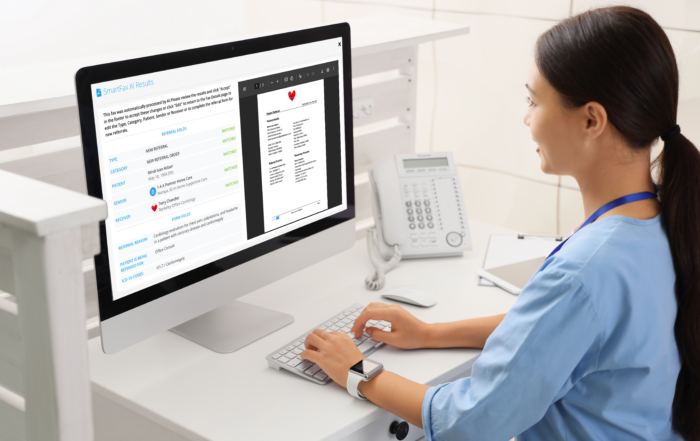
Once the exchanged data has been interpreted, it can power automated referral management workflows that route referrals, trigger tasks, update statuses, send communications, support scheduling, and keep connected records synchronized.
For example, integrated data can help ReferralMD:
- Create and route a referral automatically.
- Assign work based on location, specialty, provider, or priority.
- Retrieve current appointment availability.
- Synchronize scheduling changes between systems.
- Trigger patient outreach and reminders.
- Return referral status updates to the originating system.
- Deliver consult reports and care-transition documents.
- Alert staff when a referral stalls or a transaction fails.
- Feed referral and patient-access data into reporting workflows.
This is the difference between transferring data and using data to coordinate care.
Why Customer-Controlled Integrations Matter
Traditional healthcare integrations may require vendor intervention whenever an organization changes a provider, department, routing rule, or workflow.
That creates a disconnect between operational teams — who understand how work should flow — and technical teams or vendors responsible for changing the integration.
ReferralMD was designed to give customers greater control over how integrated data is mapped, routed, and used.
“Our goal has always been to make integrations flexible, transparent, and customer-driven. Healthcare organizations shouldn’t have to wait weeks for development every time a provider, department, or workflow changes.”
Rick Hammer, Chief Product Officer, ReferralMD
Giving customers control can make integrations more adaptable while reducing long-term maintenance complexity. It also allows technology to evolve alongside the organization rather than freezing workflows at the time of implementation.
Bi-Directional Integration Keeps Systems Aligned
One-way interfaces can create new information silos. A referral may leave the EHR, for example, but subsequent scheduling updates, referral statuses, and consult notes may never return.
SmartEXCHANGE supports automated, bi-directional synchronization for information such as:
- Patient demographics
- Referral orders
- Referral status updates
- Appointment information
- Scheduling changes
- Clinical documents
- Consult reports
- ADT data
- Provider and department information
Keeping connected systems aligned reduces the need for staff to re-enter information or search multiple applications for the latest status.
It also supports closed-loop referral management by helping both the referring and receiving organizations see what happened after a referral was sent — which is central to reducing referral leakage across a network.
Real-Time Access Supports Better Scheduling and Coordination
Not every workflow should depend on data sent through a scheduled interface.
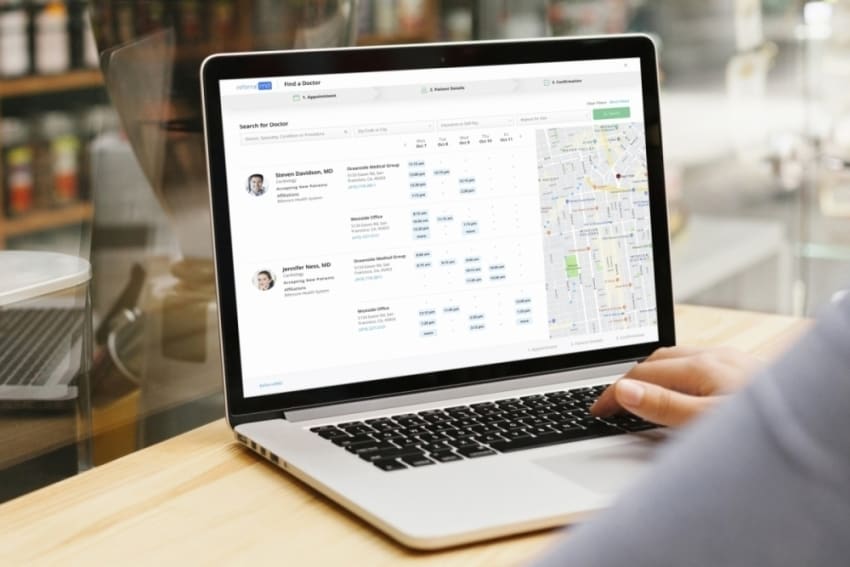
Some decisions require current information. For these workflows, SmartEXCHANGE can use secure APIs to retrieve information on demand, such as:
- Current provider availability
- Appointment openings
- Patient records
- Continuity of Care Documents
- Referral or scheduling status
Real-time data access is especially important for patient scheduling. Outdated availability can lead to scheduling errors, additional phone calls, and longer waits for patients.
By retrieving current information at the moment it is needed, organizations can make better routing and scheduling decisions.
Integration Reliability Requires Visibility
Healthcare integrations must also account for delayed messages, unavailable endpoints, malformed data, and other exceptions.
SmartEXCHANGE includes capabilities such as high-performance processing, transaction queuing, automated retries, access logs, and exception monitoring. These tools give implementation and IT teams visibility into the flow of information across connected systems.
Instead of discovering an interface problem after referrals accumulate in a backlog, teams can identify affected transactions, troubleshoot issues, and resolve exceptions more quickly.
That visibility is essential because an integration is not successful merely because it worked on launch day. It must continue to work reliably as transaction volumes, workflows, applications, and organizations change.
A Workflow-First Approach to Healthcare Integration
Healthcare organizations do not all operate the same way. An EHR, PMS, or specialty application may have its own data model, interface capabilities, and technical limitations. The organization using it will also have distinct referral, scheduling, and care-coordination processes.
For that reason, healthcare integration should begin with workflow discovery rather than a predetermined technical template.
ReferralMD’s implementation methodology identifies:
- What the organization needs to accomplish.
- Which systems contain the required information.
- What data must move between those systems.
- Which steps should be automated.
- Where human review is necessary.
- What routing and workflow rules should apply.
- Which exceptions require alerts or escalation.
- How success will be monitored after launch.
This helps establish clear expectations before development begins and reduces the risk of building an interface that exchanges data but does not meet the needs of its users.
How Interoperability Improves Referral Management
When interoperability is connected directly to referral operations, healthcare organizations — including health systems and specialty networks — can reduce several common sources of friction.
Less duplicate data entry
Patient, provider, referral, and scheduling information can move between connected systems without requiring staff to retype the same details.
Faster referral processing
Incoming orders can be created, classified, routed, and assigned automatically based on configured rules.
Better visibility
Referral statuses, appointment information, consult notes, and workflow activity can remain visible across connected teams and applications.
More consistent workflows
Standardized mappings and routing rules help organizations apply common referral processes across departments, locations, and provider networks.
Stronger closed-loop communication
Status updates and consult information can be returned to referring providers, reducing the need for manual follow-up.
More scalable automation
Integrated data can feed AI-powered fax processing, scheduling, patient communications, reporting, and other downstream workflows.
Questions to Ask When Evaluating a Healthcare Integration Platform
Before choosing an integration approach, healthcare leaders should ask:
- Does the integration support bi-directional data exchange?
- Can it connect with our EHR, PMS, RIS, and other critical applications?
- Which standards and connection methods does it support?
- Can our team manage mappings and workflow rules directly?
- How are failed transactions, delays, and exceptions handled?
- Does the integration support real-time queries when current data is required?
- Can the exchanged information trigger operational workflows?
- How will referral, scheduling, and consult statuses remain synchronized?
- What happens when providers, departments, or workflows change?
- Does the implementation process begin with our operational requirements?
The answers help distinguish basic interface connectivity from an integration platform built to support long-term operational change. This kind of data portability is also what underpins federal policy such as the CMS Interoperability and Patient Access Final Rule, which pushed payers and providers toward API-based data exchange.
From Connected Systems to Connected Care
Healthcare organizations do not need another isolated application. They need their existing systems to work together in support of the patient journey.
SmartEXCHANGE connects ReferralMD with EHRs, practice management systems, radiology systems, data warehouses, and other healthcare applications using standards such as APIs, HL7, FHIR, and Direct Secure Messaging.
More importantly, it helps organizations translate integrated data into referral routing, scheduling, patient communication, care coordination, and closed-loop workflow automation.
After more than a decade of healthcare integration experience and thousands of completed integrations, ReferralMD’s guiding principle remains straightforward: successful interoperability must be reliable, adaptable, and built around how healthcare organizations actually operate.
Frequently Asked Questions
What is SmartEXCHANGE?
SmartEXCHANGE is ReferralMD’s healthcare integration platform. It connects ReferralMD with EHRs, practice management systems, radiology information systems, data warehouses, and other applications so that data can support referral, scheduling, communication, and care-coordination workflows.
Which integration standards does SmartEXCHANGE support?
SmartEXCHANGE supports standards and connection methods including REST APIs, HL7, FHIR, Direct Secure Messaging, secure file exchange, data warehouse connections, and direct database integrations. The appropriate method depends on the connected system and use case.
Can SmartEXCHANGE integrate with multiple EHR systems?
Yes. SmartEXCHANGE is designed to support healthcare organizations and networks that use multiple EHR, PMS, RIS, and specialty systems. ReferralMD has integration experience with many widely used enterprise and ambulatory healthcare platforms.
What information can be synchronized?
Depending on the integration, SmartEXCHANGE can synchronize patient demographics, referral orders, referral statuses, appointment data, scheduling changes, clinical documents, consult reports, ADT information, and provider or department data.
How does interoperability support referral management?
Interoperability makes referral data available to operational workflows. It can reduce duplicate entry, automate routing, synchronize status changes, support scheduling, trigger patient outreach, deliver consult reports, and provide closed-loop visibility across referring and receiving organizations.
Does SmartEXCHANGE replace an EHR?
No. SmartEXCHANGE connects ReferralMD with the EHR, PMS, RIS, and other systems an organization already uses. It helps those systems exchange information and supports referral-related workflows that may span multiple applications, departments, and provider organizations.
Related Posts


Subscribe to Our Blog
Recent Posts