A referral arrives. The patient needs an appointment. Staff make a call, leave a voicemail, and move on to the next task.
Days later, the referral is still waiting. Or the patient schedules, cancels, and never rebooks. Without a clear process for identifying and following up on these situations, patients can fall out of the referral journey before receiving care.
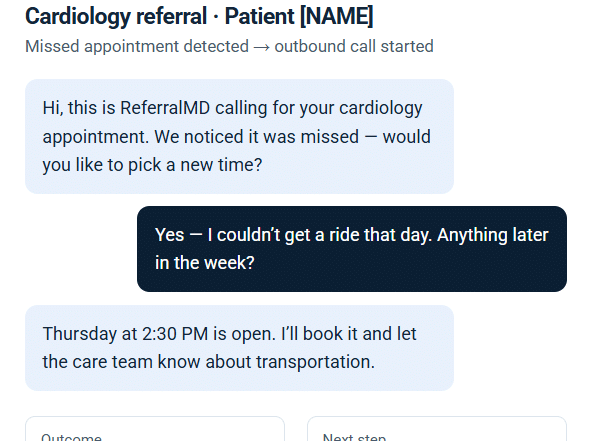
Voice AI can help reduce referral leakage by using referral workflow data to identify patients who need follow-up, proactively calling them, and helping them schedule or reschedule appointments. When connected to referral management, outreach can respond to the patient’s progress and trigger the appropriate next action.
For healthcare organizations, that creates an opportunity to address stalled referrals earlier while reducing repetitive work for staff.
What Is Inbound Referral Leakage?
Inbound referral leakage occurs when a referral received by a healthcare organization does not lead to care at that organization. An unscheduled referral, an appointment cancellation without rebooking, or a missed appointment without follow-up can each represent a point where a patient leaves the process.
Some patients choose another provider or decide not to proceed. Others encounter barriers that the receiving organization may be able to help resolve.
Those barriers can include:
- Difficulty reaching the scheduling team.
- Uncertainty about why the appointment is needed.
- Appointment times or locations that do not fit the patient’s needs.
- Questions about insurance or referral requirements.
- Confusion about the next step after a cancellation or missed visit.
Understanding why a referral stopped progressing helps teams decide whether to offer scheduling assistance, involve staff, or document an appropriate resolution.
Why Scheduling Alone Does Not Close the Referral Loop
Scheduling is an essential step, but a booked appointment does not confirm that a patient received care.
A patient can cancel after scheduling, miss the visit, or need help finding another appointment. If the workflow ends at “scheduled,” these patients may disappear from active follow-up.
Effective referral management gives teams visibility across the journey, including referrals waiting for scheduling, cancelled appointments, missed visits, and documented outcomes.
That visibility makes more targeted outreach possible. The next conversation should reflect what has happened to the referral and what the patient needs now.
How Proactive Voice AI Outreach Works
An outbound Voice AI agent connects phone conversations with referral workflow events. Organizations configure when outreach should occur, how the conversation should proceed, and what should happen afterward.
The process follows four practical steps.
1. Identify a Referral That Needs Attention
Referral activity provides signals that follow-up may be needed. Examples include a referral remaining unscheduled beyond a defined period, an appointment cancellation, or a no-show.
These signals can trigger outreach according to the organization’s workflow. Teams should define timing based on their specialties, operational needs, and clinical priorities.
2. Contact the Patient With a Relevant Next Step
The reason for the call should match the patient’s situation.
An unscheduled patient may need help choosing an appointment. A patient who cancelled may need another date or location. Someone who missed a visit may need assistance getting back on the schedule.
A relevant conversation gives the patient a clear path forward and can help surface barriers requiring staff attention.
3. Help the Patient Schedule
ReferralMD’s Voice AI scheduling capabilities support phone conversations using real-time provider availability and customer-defined scheduling rules. With the appropriate integration, the agent can book directly into an EHR, practice management system, or scheduling system.
This allows outreach to lead to an appointment during the conversation, reducing the additional steps a patient must take.
4. Trigger Follow-Up When Staff Are Needed
Some situations require a person to intervene. A patient may raise an insurance question, describe a transportation barrier, or need help beyond routine scheduling.
Configured workflows can determine when to escalate and what action should follow. Connecting that action to the referral helps staff understand why the patient needs assistance.
Where Voice AI Can Help in the Referral Journey
Proactive outreach can address several points where patients may need additional support.
| Referral situation | Proactive outreach | Intended next step |
|---|---|---|
| Referral received but not scheduled | Call to offer scheduling assistance | Book an appropriate appointment or identify a barrier |
| Appointment cancelled | Contact the patient about rebooking | Reschedule or document the patient’s decision |
| Appointment missed | Offer help arranging another visit | Return the patient to the scheduling process |
| Referral stops progressing | Ask about the obstacle to moving forward | Resolve a scheduling issue or route it to staff |
| Patient needs additional assistance | Follow configured escalation rules | Assign the appropriate staff follow-up |
For example, a specialty practice might configure outreach when a referral remains unscheduled beyond its chosen threshold. The agent could offer available appointments. If the patient needs help with an issue outside the scheduling workflow, the interaction could trigger staff follow-up.
This is an illustrative workflow; the timing and actions should reflect the organization’s configuration.
How Automation Helps Referral Coordinators
Manual follow-up involves more than making calls. Staff must review queues, decide which patients need attention, check appointment availability, attempt contact, document the outcome, and determine what comes next.
Repeating those steps across a growing referral volume can make consistent follow-up difficult.
Connecting Voice AI to referral workflows can reduce repetitive scheduling outreach and help teams focus on patients whose situations require judgment, coordination, or personal assistance.
The operational benefit comes from linking the call to an action: an appointment, a documented barrier, a staff task, or a resolved referral status.
Measure Completed Care Alongside Scheduled Appointments
To evaluate whether outreach is helping, healthcare organizations should look beyond the number of calls placed or appointments booked.
Useful measures include:
- Referral-to-scheduled rate: The share of eligible referrals that result in an appointment.
- Referral-to-completed-appointment rate: The share that result in an attended visit.
- Time to scheduling: How long patients wait between referral receipt and booking.
- Cancellation recovery: How many cancelled appointments are rebooked and subsequently attended.
- No-show recovery: How many patients return for care after missing an appointment.
- Unresolved referral age: How long referrals remain open without a documented outcome.
- Staff effort: The manual work required to move referrals forward.
Define each measure consistently and compare similar patient groups over time. A rise in bookings is useful, but tracking attended appointments reveals whether more patients are reaching care.
How ReferralMD Connects Outreach With Referral Management
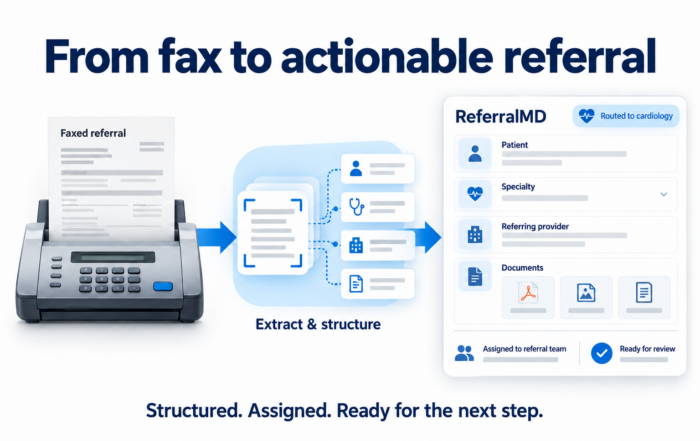
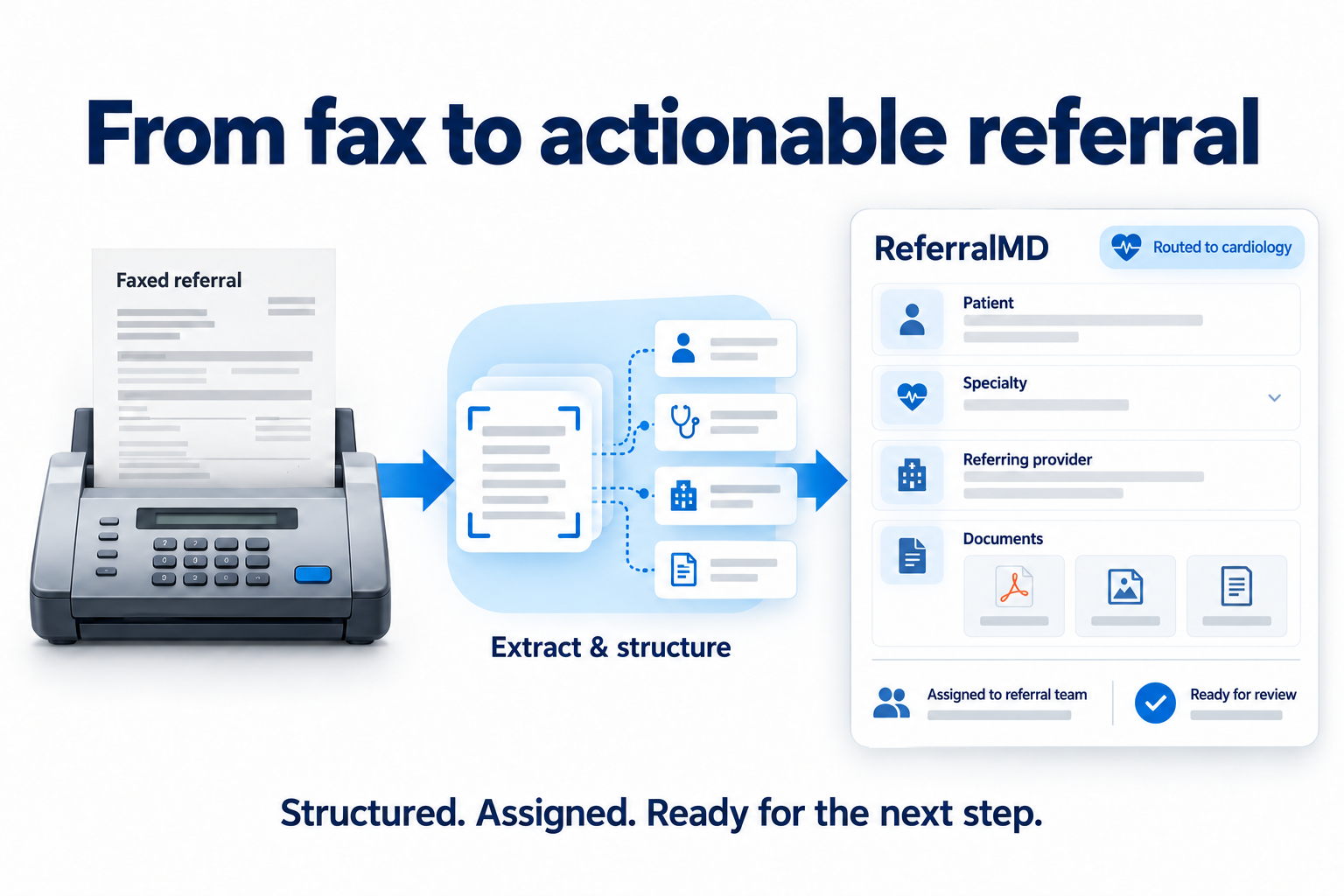
ReferralMD brings referral workflows and patient scheduling into a connected platform. Its Voice AI Scheduling Agent supports autonomous inbound and outbound scheduling calls, while its referral management tools help teams track patient progress.
Proactive outreach builds on that connection: use referral status and workflow events to determine when a patient needs contact, then guide the conversation toward an appropriate next step.
Combined with patient scheduling and EHR interoperability, this approach can help organizations connect referral receipt, outreach, booking, and follow-up.
Frequently Asked Questions
How does Voice AI help reduce referral leakage?
Voice AI can contact patients whose referrals have stalled, offer scheduling or rescheduling assistance, and trigger staff follow-up when needed. This can help address barriers before a referral remains unresolved.
Can Voice AI help patients after a cancellation or no-show?
Yes. Cancellations and missed appointments can trigger outreach to help patients reschedule, according to configured rules.
How is proactive Voice AI different from an appointment reminder?
An appointment reminder focuses on an upcoming visit. Proactive Voice AI outreach can also address referrals that have never been scheduled or appointments that need to be rebooked.
Can ReferralMD Voice AI book directly into an EHR?
ReferralMD supports real-time scheduling and direct booking into connected EHR, practice management, or scheduling systems. Availability depends on the organization’s integration and scheduling configuration.
Does every referral need an automated call?
No. Organizations can configure outreach for specific statuses and events, directing calls toward patients who need assistance at a particular point in their journey.
Help More Patients Move From Referral to Care
Every stalled referral deserves a clear next step. Proactive Voice AI outreach can help organizations identify patients who need assistance, make contact sooner, and connect the conversation to scheduling or staff follow-up.
For referral teams, that means a more consistent way to keep patients moving through the care journey.
Request a ReferralMD demo to explore how referral workflows and Voice AI outreach can help your organization reduce leakage and improve patient access.
Related Posts


Subscribe to Our Blog
Recent Posts