A received referral is not a completed referral
Most referral programs measure what arrives. Far fewer can tell you what happened next.
A fax lands, someone logs it, and the referral looks “handled” on paper. But the patient still hasn’t been reached, the appointment isn’t booked, and the referring office is still waiting to hear back.
That gap between received and completed is where patients fall through the cracks and where referral leakage quietly grows. Closing it takes more than tracking. It takes tools that do the next step: read the fax, route the work, call the patient, book the visit and flag what’s stuck.
That’s the idea behind ReferralMD’s connected AI tools. SmartFax AI, the Voice AI Scheduling Agent and Reports AI work as one workflow that carries a referral from the moment it arrives to a documented outcome.
Where referrals stall
Referrals rarely fail at one dramatic moment. They stall in the handoffs:
- In the work queue. A faxed referral waits for someone to read it, key it in and figure out where it goes.
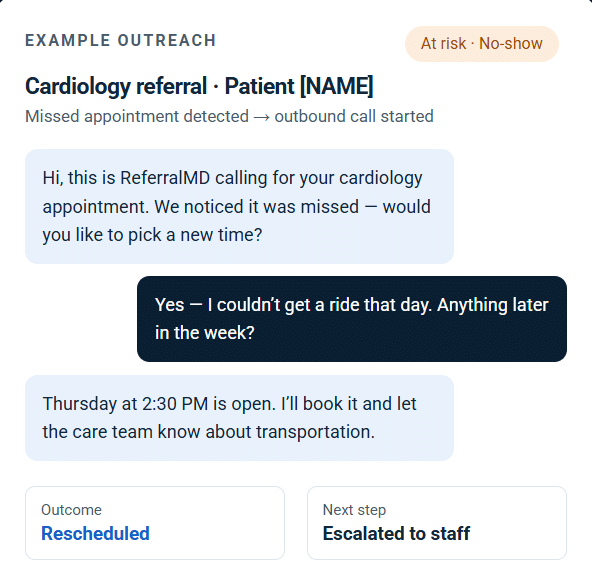
- On the phone. Staff make call after call trying to reach the patient, and each missed connection pushes the appointment further out.
- Between offices. The referring provider sends the referral and hears nothing, so they can’t tell their patient what happens next.
- In the reporting. Leaders know referrals are leaking but can’t see which stage broke down, so they can’t fix it.
Each of these is a handoff between people, systems or organizations. Connect the handoffs and the referral keeps moving.
Four stages, one connected workflow
ReferralMD links fax intake, routing, patient scheduling, communications and analytics so each stage hands off cleanly to the next.
SmartFax AI
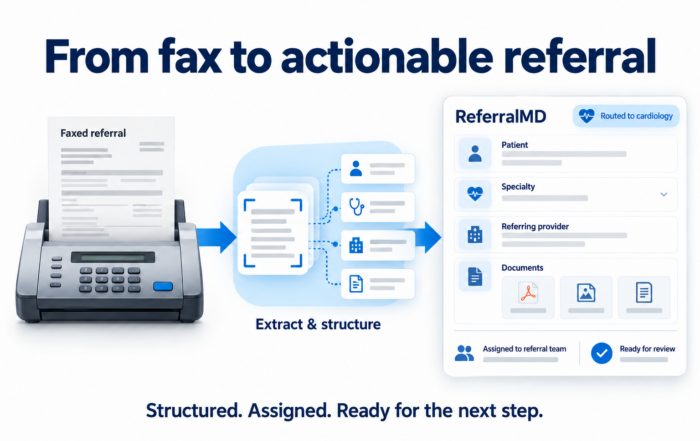
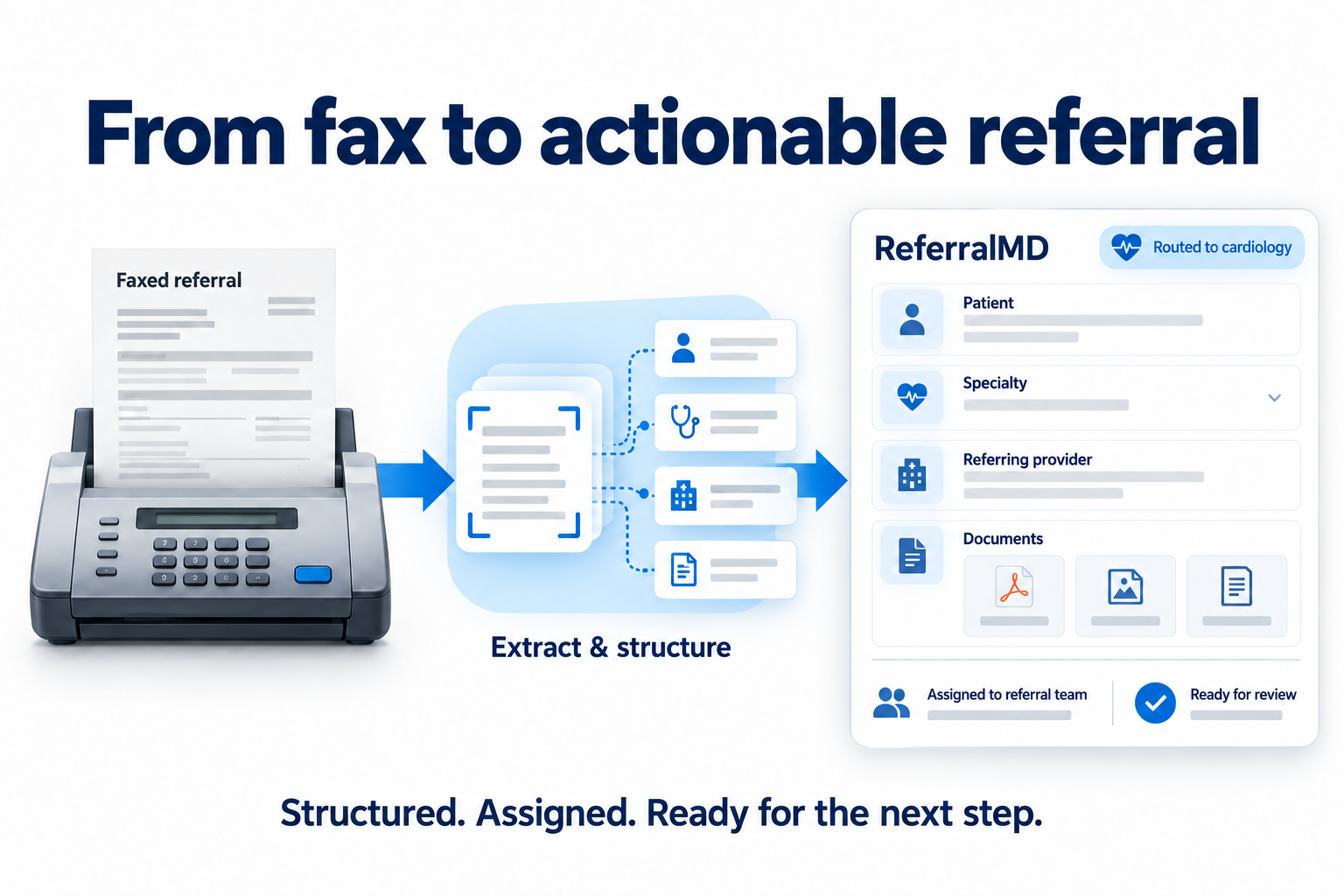
SmartFax AI reads and classifies incoming fax documents, extracts the key information and creates a structured digital referral. It then routes that referral into the right workflow, so nothing sits in a fax tray waiting to be keyed in.
Routing, tasks and notifications
Configurable routing, tasks and notifications point each referral to the person who needs to act on it. Teams can chase down missing information quickly, and referring providers stay informed instead of wondering what happened.
Voice AI Scheduling Agent
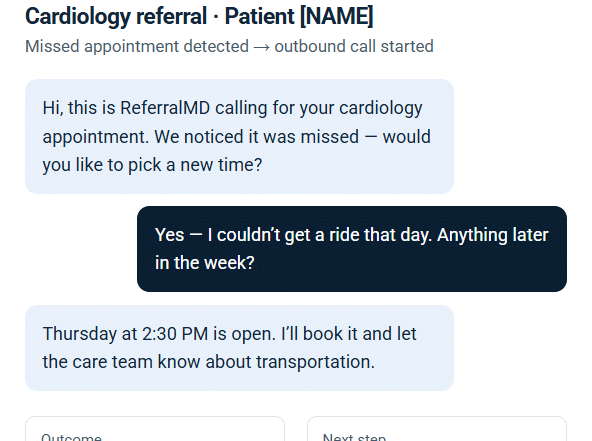
The Voice AI Scheduling Agent places and answers patient calls. It applies your organization’s own rules and real-time availability, then books the appointment directly in connected scheduling systems. Staff spend less time on phone tag, and patients get on the calendar sooner.
Reports AI
Referral status tracking and Reports AI let teams look at time to schedule, conversion and leakage. Instead of guessing where referrals stall, leaders can see exactly which ones need follow-up.
“A referral only matters if someone can see what happened to it and take the next step. Our AI tools turn incoming faxes into structured referrals, reach the patient, book the appointment and surface the gaps that remain, so fewer patients fall through the cracks.”David Bongiovanni, CEO, ReferralMD
What changes when the loop is connected
The biggest shift is visibility. Staff can finally tell the difference between three very different states:
- ReceivedThe referral has arrived and been structured.
- ScheduledThe patient was reached and the visit is booked.
- CompletedA documented downstream outcome.
That distinction matters to everyone in the process:
- Referral coordinators and intake staff spend less time keying faxes and chasing patients by phone, and more time on referrals that genuinely need a human.
- Referring providers get status updates instead of silence, which builds trust and keeps them sending patients your way.
- Leaders see time to schedule, conversion and leakage by stage, so they can fix the specific point where referrals break down.
Visit completion is confirmed through each organization’s own workflow and connected systems, so the outcome you see reflects what actually happened.
Frequently asked questions
What does it mean to close the referral loop?
Closing the referral loop means following a referral from the moment it arrives to a documented outcome: the patient is reached, the appointment is booked, and the referring provider knows what happened.
What’s the difference between a received referral and a completed one?
A received referral has only arrived. A completed referral has been scheduled and has a documented downstream outcome. ReferralMD tracks each of those states separately.
How does ReferralMD handle faxed referrals?
SmartFax AI reads and classifies incoming faxes, extracts key information, creates a structured digital referral and routes it into the right workflow.
Can AI schedule patient appointments from a referral?
Yes. The Voice AI Scheduling Agent places and answers patient calls, applies customer-defined rules and real-time availability, and books appointments directly in connected scheduling systems.
How do I find where referrals are leaking?
Referral status tracking and Reports AI show time to schedule, conversion and leakage, so teams can see which referrals need follow-up.
Who is ReferralMD built for?
Health systems, hospitals, accountable care organizations, clinically integrated networks, community health centers and specialty practices.
See every referral through to completion
If your team can tell you how many referrals arrived but not how many turned into visits, the loop is still open. ReferralMD connects intake, scheduling and follow-up so every referral has a next step and an owner.
Or read the full announcement from Sept. 23, 2026.
Related Posts

Subscribe to Our Blog
Recent Posts