How can healthcare organizations scale patient operations during growth or a merger? Start by standardizing intake, referrals, scheduling, and follow-up. Connect the systems that support those workflows, automate repeatable administrative tasks, and assign owners to exceptions. Then monitor access, referral completion, and workload by location so expansion does not hide operational problems.
Opening clinics, adding specialties, or acquiring another organization changes more than the size of a healthcare network. It changes how patients enter the system, how information moves, and who is responsible for the next step in care.
A larger network can create new access points while also creating duplicate work, scheduling delays, and referrals that fall between teams. Scaling in healthcare means increasing operational capacity while maintaining reliable patient access, coordination, and service quality.
For healthcare leaders planning growth or mergers and acquisitions (M&A) in 2026, the following practices provide a practical starting point.
Why healthcare growth and M&A put pressure on patient operations
Organizations often enter a merger with different electronic health records (EHRs), fax numbers, scheduling rules, provider directories, and reporting definitions. A referral marked “complete” in one location may mean “appointment booked,” while another location uses it to mean “visit completed.” Without shared definitions, leaders cannot reliably compare performance.
Growth also increases the number of handoffs. Intake staff may need to request missing documents, confirm the appropriate specialty, check scheduling requirements, and communicate with a receiving clinic. If ownership is unclear, the patient waits while teams assume someone else is handling the work.
The goal is to create a consistent operating model across the network while allowing local differences that affect care, such as specialty requirements, visit types, and patient language preferences.
1. Map the patient journey before adding more volume
Document the workflow from the first referral or patient inquiry through the completed appointment and return of information to the referring provider. Include fax, portal, phone, and electronic intake channels rather than mapping only the ideal digital pathway.
- Identify entry points: Where do referrals and appointment requests arrive at each location?
- Assign ownership: Who reviews incoming work, requests missing information, contacts the patient, and escalates delays?
- Record dependencies: Which steps require clinical review, eligibility checks, authorization, or complete documentation?
- Expose handoff gaps: Where does work leave one team’s queue without appearing in another?
- Establish a baseline: Measure current demand, backlog age, scheduling time, and referral completion before changing the process.
For an acquisition, inventory existing referral queues and unresolved patient requests before transferring work. A data migration should account for open tasks and ownership as well as patient records.
2. Standardize core workflows while preserving local needs
Use shared referral statuses, required intake fields, escalation rules, and service expectations across participating locations. Make the next action and responsible team visible for every referral.
Standardization should make work easier to manage. It should also preserve necessary differences: an orthopedic referral may require imaging, while another specialty needs a different document set or clinical review process.
A practical shared workflow might include received, awaiting information, ready for scheduling, patient contacted, scheduled, visit completed, and closed. Track canceled, declined, and unreachable referrals separately, with a reason, so administrative closure does not get confused with completed care.
Referral management software can help teams coordinate these tasks across locations. During implementation, agree on status definitions and queue ownership before expanding the workflow to additional sites.
3. Connect systems to the actions staff need to complete
An integration should support a specific operational task. Receiving a document is useful, but staff also need to know whether it belongs to the right patient, whether information is missing, and whether the next action appears in the appropriate queue.
Prioritize patient identity matching, referral data, supporting documents, appointment availability, and status updates. Define the source of truth for each data element and test how errors are handled. The federal health IT interoperability resources provide background on electronic health information exchange and standards.
ReferralMD’s SmartEXCHANGE integrations support connections using APIs, HL7, FHIR, and Direct. Supported transactions depend on the connected system and implementation. For scheduling workflows, confirm both availability retrieval and appointment write-back requirements before deployment.
Keep diagnostic logistics aligned with digital workflows
When expansion increases movement of specimens or diagnostic materials between facilities, document pickup responsibilities, handling requirements, delivery windows, and escalation procedures. Evaluate professional medical courier services where specialized transport is needed, and verify service requirements for the materials being transported.
Physical delivery and electronic result availability are separate steps. Assign responsibility for confirming that results reach the care team and that required follow-up happens. Review vendor privacy responsibilities with your compliance team using HHS guidance on business associates.
4. Automate repeatable administrative work
Start with high-volume tasks that have clear inputs, consistent rules, and a defined exception path. Good candidates include fax classification, document routing, patient reminders, and routine scheduling outreach.
In an Edge survey conducted in January 2026 by Propeller Insights among more than 250 healthcare leaders, 75.5% of respondents reported increased workload over the previous 12 months, and 56.3% reported daily or weekly administrative backlogs. The findings, published through Business Wire, reflect the surveyed leaders’ experiences rather than a measure of every healthcare organization.
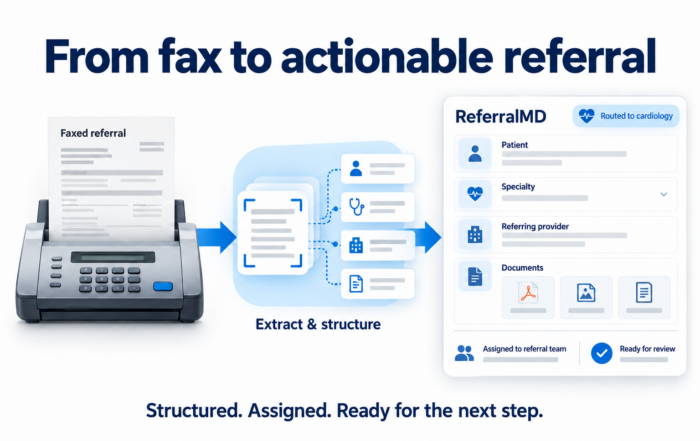
- Fax processing: ReferralMD SmartFax AI can read and classify incoming faxes, extract information, and create structured referrals for configured workflows.
- Appointment access: Patient scheduling tools let patients book or request appointments and support automated reminders.
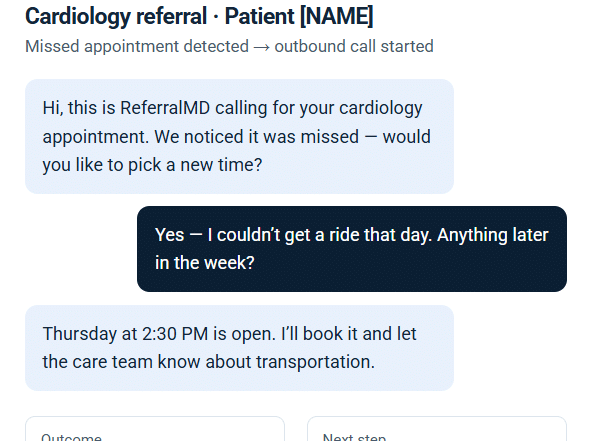
- Scheduling calls: ReferralMD’s Voice AI Scheduling Agent supports incoming and outgoing calls, uses real-time availability and configured rules, and books into connected scheduling systems.
Measure whether automation removes work from the full process. A tool that extracts information but leaves staff copying it into another application may simply move the bottleneck. Review exception rates, corrections, and the time required to resolve failed transactions.
Explore automated scheduling tools and the broader role of AI in healthcare when assessing which parts of the workflow can be simplified.

Keep administrative automation distinct from clinical decision-making. Clinical urgency and treatment decisions require appropriate clinical oversight. Route ambiguous records, conflicting patient information, and requests outside approved rules to trained staff.
5. Strengthen staffing, training, and change management
Technology changes the distribution of work; it does not remove the need to plan staffing. Estimate demand by location, specialty, and intake channel, then assess the time needed for routine tasks and exceptions. Include clinician appointment capacity as well as administrative processing capacity.
Train teams on actual scenarios: missing referral documents, duplicate records, unsuccessful outreach, authorization delays, and system downtime. Name local workflow champions and provide a clear way to report problems after go-live.
Use shared communication practices to make handoffs consistent. AHRQ’s TeamSTEPPS program offers evidence-based teamwork tools that address communication, team leadership, situation monitoring, and mutual support.
To reduce daily friction, simplify duplicate documentation, unnecessary inboxes, and repeated status checks. Review workloads with frontline staff so centralizing operations does not create a new queue that nobody has capacity to manage.
ReferralMD’s earlier discussion of physician burnout and administrative challenges provides historical context. For communication tools, review the original article’s linked overview of telehealth and messaging platforms alongside your organization’s security, privacy, and workflow requirements.
6. Use consistent metrics to identify bottlenecks
Review operational data weekly during a rollout. Compare performance by site, specialty, intake channel, and patient population rather than relying only on a network-wide average. Use the same definitions before and after expansion.
| Metric | Suggested definition | Why it matters |
|---|---|---|
| Referral backlog | Open referrals grouped by current status and time in that status. | Shows where work is accumulating. |
| Time to first outreach | Elapsed time from referral receipt to the first documented patient contact attempt. | Shows whether patients are being contacted promptly. |
| Time to booking | Elapsed time from referral receipt to appointment booking; report median and a high percentile. | Reveals typical delays and long-wait cases. |
| Referral completion rate | Percentage of a defined referral cohort with a documented completed visit, using a consistent follow-up window. | Distinguishes completed care from scheduled appointments. |
| No-show rate | No-show appointments divided by eligible scheduled appointments for the reporting period. | Helps assess reminders and access barriers. |
| Administrative workload | Processing time, manual touches, and exception volume by workflow. | Shows whether automation reduces staff effort. |
Review missing data and unsuccessful outcomes alongside completed visits. A referral may remain unresolved because of patient preference, insurance restrictions, unavailable capacity, or failed outreach. Recording the reason helps teams choose the right response.
7. Pilot changes before expanding across the network
Use implementation science as a practical discipline: define the problem, test a workflow, measure adoption and results, and adapt before expanding. A successful pilot should produce a repeatable operating process rather than depend on one person’s workarounds.
Choose a site or specialty with enough volume to expose common problems. Set success criteria using your baseline, review failures, and confirm that receiving teams can support the workflow. Expand in stages after responsibilities, training, and exception handling are stable.
A practical first 90 days for healthcare growth or M&A
The following is an illustrative rollout plan. Adjust timing to the organization’s size, integration complexity, and operational readiness.
- Days 1–30: Assess and align. Inventory systems and intake channels, baseline performance, reconcile open referrals, and agree on owners and shared definitions.
- Days 31–60: Configure and pilot. Test referral routing, required fields, scheduling rules, data exchange, and exceptions at a limited set of locations. Train staff before go-live.
- Days 61–90: Evaluate and expand. Compare results with the baseline, address failure points, and expand only when teams can support the process. Continue weekly performance reviews.
8. Keep patient access and whole-person care at the center
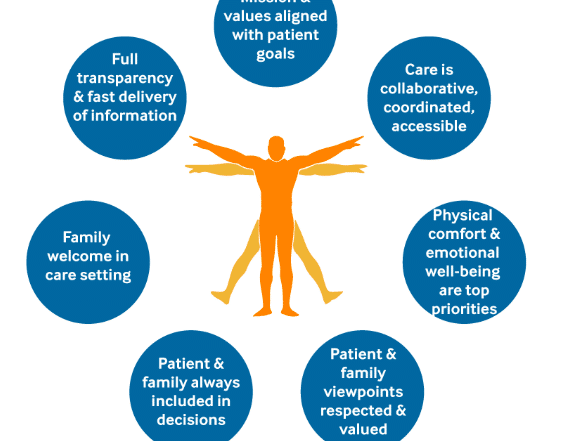
Growth should make care easier to navigate. Give patients clear instructions, a way to reach staff, and communication suited to their needs. Offer alternatives for patients who cannot use online scheduling or automated channels.
Design patient-centric care models that enhance the patient journey from the first contact through follow-up.

Review language needs, transportation barriers, accessibility, and availability by location. For patients moving between primary care, specialty services, behavioral health, and social support, define who coordinates the handoff and communicates the next step.
Centralized workflows can improve consistency, but local teams still need a way to address community-specific barriers. Track access and completion by relevant population groups so a strong overall average does not obscure uneven service.
How ReferralMD supports scalable patient operations
ReferralMD connects referral management, fax automation, scheduling, patient communication, and integrations in a referral operating platform. Healthcare organizations can use these capabilities to standardize administrative workflows while coordinating care across locations.
For growing networks, the implementation should begin with a defined operational problem: a referral backlog, fragmented intake, repeated scheduling calls, or limited visibility into completion. Select workflows and integrations that address that problem, then measure the results.
Planning an expansion or acquisition? Book a ReferralMD demo to discuss referral workflows, scheduling capacity, and integration needs across your organization.
Frequently asked questions about scaling healthcare operations
What does scaling patient operations mean?
Scaling patient operations means increasing the capacity to manage intake, referrals, scheduling, communication, and follow-up as demand grows. It requires clear workflows, sufficient staffing and appointment capacity, connected systems, and performance measures that help leaders identify delays.
What should healthcare organizations standardize first after a merger?
Start with referral statuses, required intake information, queue ownership, escalation rules, and reporting definitions. These shared foundations make work visible across locations while allowing specialty-specific requirements and local patient needs to remain part of the workflow.
How does referral management support healthcare growth?
Referral management gives teams a consistent way to receive, assign, track, and follow up on referrals. Shared status visibility helps staff identify missing information, scheduling delays, and unresolved handoffs as more clinics and providers join the network.
Can patient operations scale before every location uses the same EHR?
Yes. Shared workflows can connect locations that use different EHRs through supported interfaces and operational tools. Organizations still need to validate patient matching, data mappings, access controls, scheduling transactions, and exception handling for each connected system.
Which tasks are suitable for healthcare administrative automation?
Repeatable tasks with clear rules are good starting points, including fax classification, referral routing, reminders, and routine scheduling outreach. Staff should handle exceptions, and appropriate clinicians should oversee decisions involving clinical urgency or treatment.
Does booking an appointment close the referral loop?
Booking is one milestone. A closed-loop process also tracks the visit outcome and returns relevant information to the referring team. Define how completed, canceled, declined, and unreachable referrals are recorded so appointment booking is not mistaken for completed care.
About the author

Kelly Moser is the co-founder and editor at Home & Jet, a digital magazine for the modern era. She’s also the content manager at Login Lockdown, covering the latest trends in tech, business and security. Kelly is an expert in freelance writing and content marketing for SaaS, Fintech, and ecommerce startups.
Related Posts



Subscribe to Our Blog
Recent Posts