From Referral to Goal: What Healthcare Can Learn From the World Cup
The World Cup showcases what happens when talented people work from the same playbook. Players communicate, anticipate the next move, execute clean handoffs, and keep the ball moving toward a shared goal.
Healthcare referral management should work the same way.
Yet many hospitals, healthcare practices, and specialty care organizations still rely on disconnected faxes, phone calls, spreadsheets, inboxes, and manual follow-up to move patients through the referral process.
When teams cannot see where a referral stands, who owns the next action, or whether the patient has been scheduled, momentum disappears. Staff spend valuable time tracking down information, providers lack visibility, and patients wait longer for care.
ReferralMD helps healthcare teams replace fragmented processes with a coordinated referral workflow that keeps patients moving from intake to appointment.
Every Referral Needs a Clear Path to the Goal
In soccer, possession alone does not win the match. A team must move the ball forward and convert opportunities into goals.
The same principle applies to healthcare referrals. Receiving a referral is only the beginning. The referral must be reviewed, routed, documented, followed up on, scheduled, and tracked through completion.
An effective referral management solution gives teams the tools to manage that entire journey—not simply record that a referral was received.
ReferralMD helps organizations:
- Centralize referral intake from multiple channels
- Track referral status in real time
- Automate routine tasks, alerts, and follow-up
- Route referrals to the appropriate staff or provider
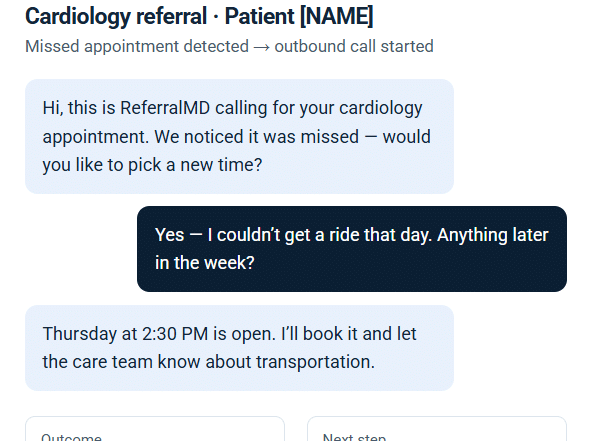
- Coordinate communication with patients and referring providers
- Move patients to scheduling faster
- Identify stalled referrals before they are lost
Strong Teams Depend on Better Handoffs
A perfectly timed pass keeps an attack moving. A missed handoff can stop it immediately.
Healthcare referrals face the same risk. Information may pass between a referring provider, fax queue, referral coordinator, specialty practice, scheduling team, and patient before care is delivered.
When these handoffs depend on manual processes, important details can be delayed, duplicated, or overlooked.
ReferralMD creates greater visibility across the referral journey so staff can quickly understand:
- When the referral was received
- Whether the necessary documentation is complete
- Which team or staff member owns the next step
- Whether the patient has been contacted
- Whether an appointment has been requested or scheduled
- Why a referral may be stalled
This shared visibility helps hospitals and practices reduce administrative friction while improving coordination across teams and locations.
Turn Faxed Referrals Into Actionable Workflows
Healthcare fax remains a major part of referral intake, but it should not require staff to manually open, sort, review, rename, route, and re-enter every document.
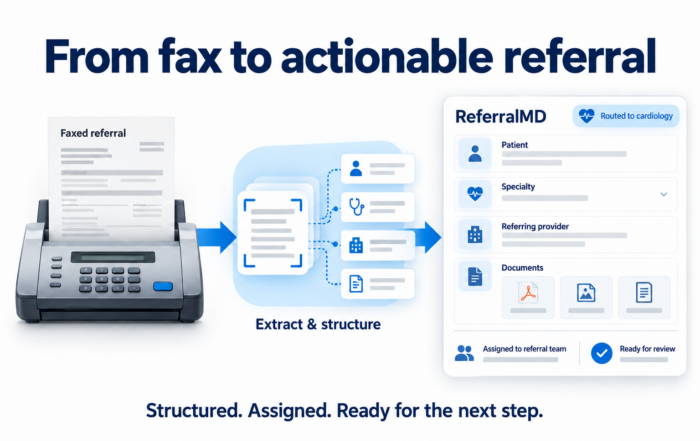
ReferralMD’s referral fax management capabilities help teams transform inbound fax documents into structured, actionable workflows.
AI-powered fax processing can help identify documents, extract relevant information, organize incoming records, and route work to the appropriate queue. This reduces repetitive administrative work and helps teams begin processing referrals sooner.
Instead of allowing referrals to sit unnoticed in a fax inbox, healthcare organizations can bring them into a visible, trackable process.
Scheduling Is Where Referral Opportunities Become Patient Access
A World Cup team can create multiple scoring opportunities, but success ultimately depends on finishing the play.
For healthcare organizations, the equivalent is converting a referral into a scheduled appointment.
ReferralMD connects referral workflows with patient scheduling, helping staff and patients move more easily from referral receipt to the next available appointment.
With a more connected process, organizations can:
- Reduce delays between referral receipt and patient outreach
- Give patients more convenient scheduling options
- Improve coordination between referral and scheduling teams
- Reduce the number of referrals that remain unresolved
- Create a smoother patient access experience

How ReferralMD Supports Different Healthcare Teams
Hospitals and Health Systems
Hospitals and health systems must coordinate referrals across departments, facilities, employed providers, and external partners.
ReferralMD helps standardize referral workflows, improve network-wide visibility, reduce referral leakage, and give operational leaders insight into referral volume, status, and conversion.
Healthcare Practices
Independent and multi-location practices often manage referrals with limited administrative resources.
ReferralMD helps practices reduce manual follow-up, centralize referral information, automate routine work, and create a more consistent process without relying on spreadsheets or disconnected inboxes.
Specialty Care Practices
Specialty practices depend heavily on incoming referrals for patient growth and timely access to care.
ReferralMD helps specialty teams capture inbound referrals, prioritize next actions, communicate with referring providers, schedule patients faster, and strengthen relationships with important referral sources.
Smaller specialty organizations can also explore ReferralMD Practice, including a free option for getting started with referral management.
Visibility Helps Teams Improve Their Performance
Winning teams continuously evaluate performance. They study possession, movement, missed opportunities, and outcomes—not just the final score.
Healthcare organizations also need referral analytics that show more than how many referrals were received.
ReferralMD helps teams understand where referrals originate, how quickly staff respond, where delays occur, which referrals convert to appointments, and where workflow improvements may be needed.
These insights can help leaders improve staffing, workflows, patient access, provider relationships, and network performance.
Build a Referral Process Designed to Win
The best teams do not rely on individual heroics. They rely on communication, visibility, clearly defined responsibilities, and coordinated execution.
Healthcare referral management is no different.
ReferralMD brings referral intake, AI-powered fax management, workflow automation, patient scheduling, status tracking, provider communication, and analytics into one connected platform.
The result is less administrative chasing, fewer stalled referrals, faster patient access, and a more coordinated experience for staff, providers, and patients.
Do not let another referral get lost in midfield.
Explore ReferralMD to see how your organization can turn more referral opportunities into scheduled care.
Frequently Asked Questions
What is healthcare referral management?
Healthcare referral management is the process of receiving, reviewing, routing, tracking, scheduling, and closing the loop on patient referrals. Referral management software helps organizations coordinate these steps in one visible workflow.
How does referral management software help hospitals?
Referral management software helps hospitals standardize workflows across departments and locations, improve referral visibility, reduce administrative work, identify delays, and keep more patients within the appropriate care network.
How can specialty practices improve referral conversion?
Specialty practices can improve referral conversion by responding quickly, centralizing referral intake, automating follow-up, making scheduling easier, tracking every referral, and identifying stalled cases before patients disengage.
Can ReferralMD process faxed referrals?
Yes. ReferralMD provides AI-powered healthcare fax management capabilities that help organizations receive, organize, process, and route faxed referral documents into actionable workflows.
Is ReferralMD available for smaller healthcare practices?
Yes. ReferralMD offers options for hospitals, health systems, healthcare practices, and specialty care organizations. ReferralMD Practice includes a free option designed to help smaller practices begin managing referrals more effectively.
Related Posts


Subscribe to Our Blog
Recent Posts