7 Best Practices for Healthcare Referral Coordinators
A referral coordinator sits at one of the highest-leverage points in a patient’s care journey — the moment a referral either moves forward or quietly stalls. Industry benchmarking from MGMA puts the referral “stall-out” rate at roughly 38%, and separate research shows 25–50% of referring physicians never get confirmation that their patient completed the specialist visit. Every stalled referral is a patient who may not get needed care — and for the practice, it’s leaking revenue that a few workflow changes could recover.
The good news: the coordinators who consistently close the loop tend to share the same handful of habits. Below are seven best practices for healthcare referral coordinators, updated for 2026, covering relationship management, communication, workflow standardization, and the technology now reshaping the role.
Quick answer: The most effective referral coordinators (1) build direct relationships with referring and receiving providers, (2) fully understand each patient’s clinical and insurance picture before scheduling, (3) communicate proactively with patients, providers, and staff, (4) standardize the referral process with templates and checklists, (5) use referral management software to centralize and automate tracking, (6) monitor referral status data to catch bottlenecks early, and (7) close the loop with structured follow-up after every referral.
1. Build Relationships with Referring and Receiving Providers
Referrals move faster when a coordinator has a real relationship with the office staff on both ends — not just a fax number or a portal login. Coordinators who know the front-desk teams, schedulers, and clinicians at their top referral sources can resolve missing information with a phone call instead of a week of back-and-forth.
- Identify your top 10–20 referral sources by volume and schedule a recurring check-in (quarterly, at minimum) with each.
- Give referring offices a single point of contact for questions instead of a general inbox.
- Loop in office managers and schedulers, not just providers — they’re usually the ones who actually move the paperwork.
- For ACOs, CINs, and FQHCs, use existing network events and provider meetings to put faces to names.
2. Fully Understand Each Patient’s Clinical and Insurance Needs
A referral coordinator’s clinical literacy directly affects whether a patient lands with the right specialist the first time. Nearly 20 million referrals a year are considered clinically inappropriate, largely because the referring team lacked visibility into specialist availability or scope — an outcome a well-informed coordinator can often prevent.
- Pull complete records (visit notes, imaging, labs) before scheduling, not after the specialist asks for them.
- Confirm insurance eligibility and prior authorization requirements upfront to avoid a canceled first visit.
- Flag high-acuity or complex cases so they’re triaged and scheduled with appropriate urgency.
- Keep the referral reason, urgency level, and relevant history visible to the receiving specialist — don’t make them dig for it.
3. Be a Proactive, Clear Communicator
Communication gaps are one of the most common reasons referrals stall. Coordinators who communicate proactively — rather than waiting to be asked — prevent the “black hole” experience patients describe when they don’t hear back after being referred out.
- Use active listening and confirm understanding with patients, providers, and staff before ending a call.
- Send referring providers a receipt confirmation the moment a referral is received, not just when it’s scheduled.
- Set clear expectations with patients about wait times, what to bring, and what happens next.
- Offer communication in the patient’s preferred language and format (phone, text, portal) to reduce no-shows.
4. Standardize the Referral Process
Ad hoc referral handling — a mix of fax, email, sticky notes, and spreadsheets — is where most leakage starts. Standardizing the workflow removes guesswork and makes it possible to spot where referrals are getting stuck.
- Build a centralized system for tracking every referral from creation to completion, instead of scattering them across inboxes and paper.
- Create templates for your highest-volume referral types (cardiology, ortho, behavioral health, imaging) so required fields are never missed.
- Automate routine communications — receipt confirmations, appointment reminders, status updates — so staff time goes to the referrals that actually need judgment.
- Document a clear escalation path for referrals that haven’t moved within a set number of days.
5. Use Referral Management Software to Centralize and Automate Tracking
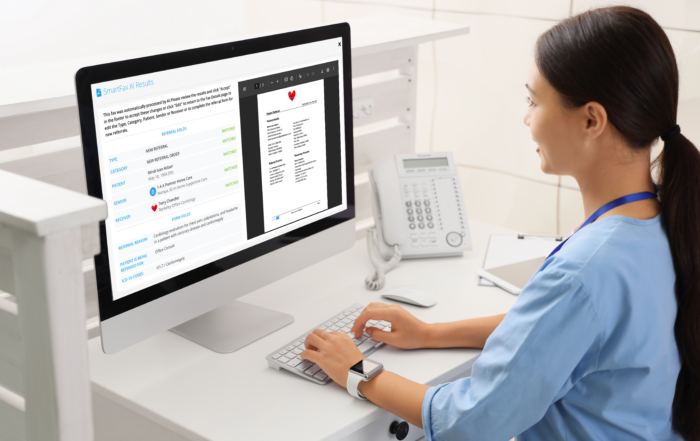
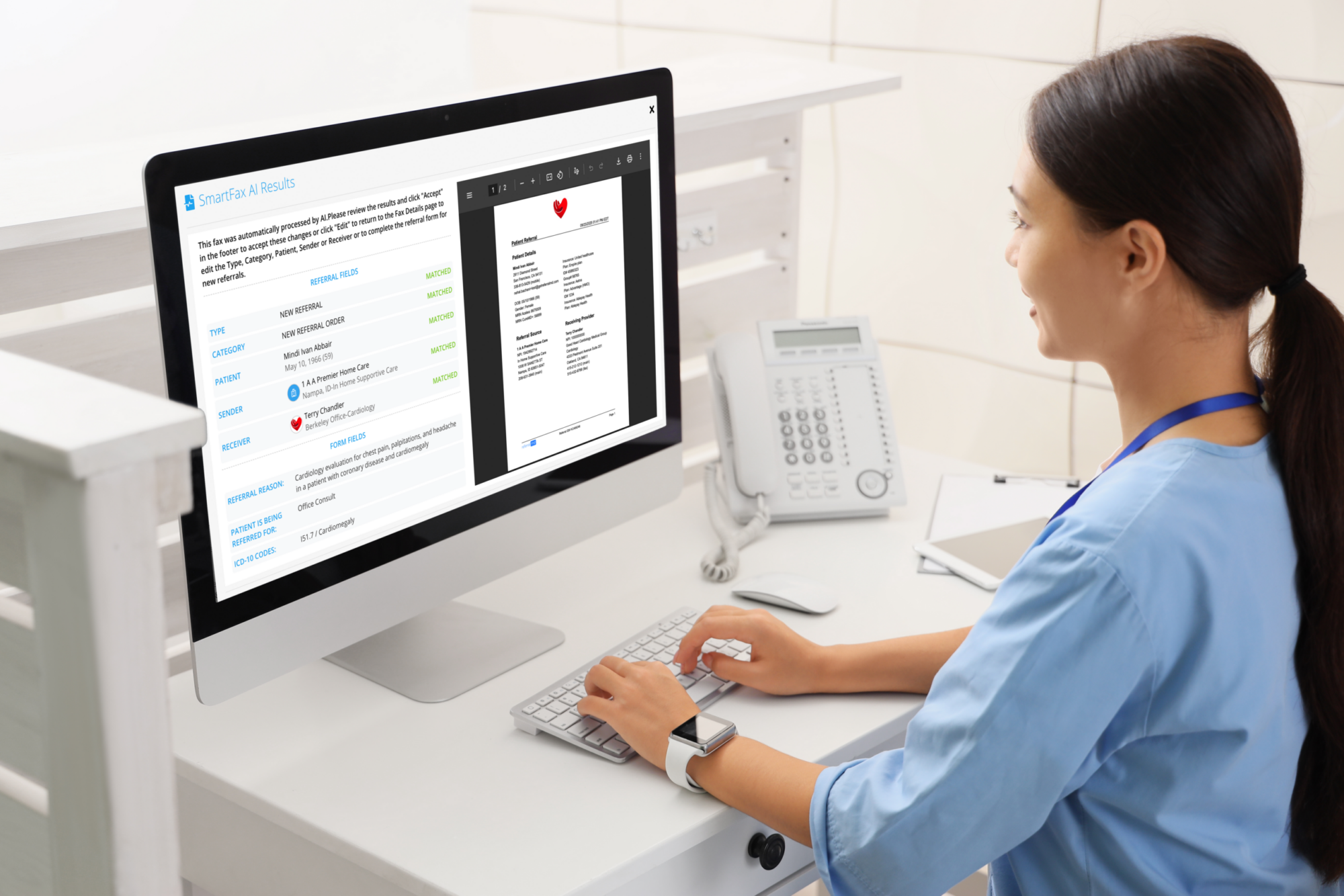
Manual, fax-based referral tracking simply can’t keep pace with the volume most practices handle today. Purpose-built referral management software — like ReferralMD’s SmartMatch provider directory and SmartFax AI fax replacement — gives coordinators one system of record instead of juggling multiple tools, and can route incoming referrals automatically based on specialty, location, and provider availability.
- Replace manual fax logs with a platform that automatically captures, routes, and time-stamps every referral.
- Use provider-matching tools to route patients to in-network specialists with true availability, reducing avoidable out-of-network leakage.
- Set automated alerts for referrals that stall past a defined SLA, instead of relying on staff to remember to check.
- Look for software that pushes data directly into your EHR so coordinators aren’t double-entering information.
6. Track Referral Data and Monitor for Bottlenecks
You can’t fix what you can’t see. Coordinators — and the practices that support them — should treat referral completion rate, time-to-schedule, and no-show rate as core operational metrics, not just billing afterthoughts.
- Review referral status dashboards weekly to catch stalled referrals before they become 30- or 60-day-old problems.
- Track which referral sources or specialties have the highest leakage and investigate why (capacity? insurance mismatch? communication gaps?).
- Share referral volume and completion data with referring providers — it reinforces the relationship and often surfaces issues neither side knew about.
7. Follow Up and Close the Loop — Every Time
The single habit that separates high-performing referral coordinators from the rest is follow-up. A referral isn’t complete when it’s sent; it’s complete when the patient is seen, the visit note comes back to the referring provider, and everyone involved knows the outcome. This is the essence of closed-loop referral management, and research on structured tracking associates it with meaningfully higher referral completion rates.
- Follow up on no-shows within 48–72 hours rather than waiting for the next scheduled check-in.
- Confirm that consult notes and results make it back to the referring provider — this is where many referrals quietly die.
- Close out each referral in your tracking system with a documented outcome, not just a status change.
- Address issues or delays directly with the patient, provider, or specialist office as soon as they surface, rather than after the fact.
Why These Practices Matter
Referral leakage isn’t a minor operational hiccup — industry estimates put the cost to U.S. health systems in the tens of billions of dollars annually, and individual practices can lose a meaningful share of potential revenue to referrals that never complete. Beyond the financial impact, every referral that stalls is a patient whose care was delayed or never delivered. The seven practices above won’t eliminate leakage entirely, but they address the root causes research consistently points to: poor communication, lack of tracking, and manual, fax-based workflows.
Frequently Asked Questions
What does a healthcare referral coordinator do?
A referral coordinator manages the process of connecting patients with the appropriate specialist or service, including verifying insurance, gathering clinical records, scheduling appointments, communicating with referring and receiving providers, and following up to confirm the referral was completed.
What is the biggest challenge referral coordinators face?
The most common challenge is referral leakage — referrals that stall or never get completed because of missing information, lack of follow-up, or manual tracking across fax, email, and spreadsheets instead of a centralized system.
How can referral coordinators reduce referral leakage?
Referral coordinators reduce leakage by standardizing the referral workflow, confirming receipt of every referral, using referral management software to track status automatically, and following up on no-shows or stalled referrals within a few days rather than weeks.
What software do referral coordinators use to manage referrals?
Most referral coordinators use referral management platforms that centralize incoming and outgoing referrals, automate fax and communication workflows, match patients to in-network specialists, and integrate with the practice’s EHR — replacing manual, paper- or fax-based tracking.
What is closed-loop referral management?
Closed-loop referral management means tracking a referral from the moment it’s created through the specialist visit and back to the referring provider, so every referral has a documented outcome instead of an unknown one.
ReferralMD helps referral coordinators centralize incoming and outgoing referrals, automate fax and communication workflows, and close the loop with providers and patients.
Related Posts


Subscribe to Our Blog
Recent Posts