What Is Referral Management? How the Right Solution Improves Efficiency, Reduces Manual Work, and Keeps Patients in Network
Referral Management: A Practical Definition
Referral management is the process healthcare organizations use to receive, review, route, track, schedule, and close the loop on patient referrals.
In a manual environment, referrals may arrive by fax, phone, email, patient request, portal submission, or secure message. Staff then have to sort documents, enter patient information, verify referral details, contact patients, coordinate with providers, and track whether the patient was actually scheduled.
A modern referral management solution helps centralize these steps into one structured workflow. The goal is simple: make it easier for healthcare teams to get patients to the right care faster, with less manual effort and better visibility.
Why Referral Management Matters in Healthcare
Referrals are a critical part of the patient journey. They connect patients from primary care to specialists, from hospitals to post-acute care, from community providers to health systems, and from one care team to another.
When referral workflows are fragmented, healthcare organizations often experience:
- Delayed patient scheduling
- Missing or incomplete referral information
- Duplicate manual data entry
- Lost or unworked fax referrals
- Limited visibility into referral status
- Higher referral leakage
- Increased phone calls between offices
- Poor patient communication
- Lower appointment conversion rates
These problems affect more than administrative productivity. They can delay care, frustrate patients, weaken referring-provider relationships, and make it harder for organizations to keep patients within the appropriate care network.

How the Right Referral Management Solution Improves Efficiency
The right centralized referral management platform helps healthcare teams move away from disconnected intake channels and toward a centralized referral workflow.
Instead of staff manually checking fax folders, email inboxes, spreadsheets, and separate scheduling tools, referrals can be captured, organized, assigned, and tracked from one place.
A strong referral management solution should help teams:
- Capture referrals from multiple intake channels
- Reduce manual data entry
- Standardize referral review and routing
- Assign referrals to the right department, provider, or location
- Track each referral from receipt to scheduling
- Identify missing information earlier
- Improve patient follow-up
- Close the loop with referring providers
- Measure referral volume, conversion, leakage, and processing time
This type of workflow is especially important for organizations managing high referral volume across multiple providers, specialties, sites, or service lines.
Reducing Manual Input and Administrative Burden
Manual data entry is one of the biggest sources of inefficiency in referral management.
Referral coordinators and front-office teams often spend time rekeying patient demographics, insurance information, clinical notes, diagnosis details, referring-provider information, and appointment preferences into different systems.
That manual work creates several risks:
- Slower referral processing
- Increased data-entry errors
- Duplicate records
- Missed follow-up steps
- Staff burnout
- Inconsistent patient communication
A referral management solution reduces manual input by capturing referral information in a more structured way and organizing it into a consistent work queue. When referrals are digitized, routed, and tracked more efficiently, staff can spend less time searching for information and more time helping patients access care.
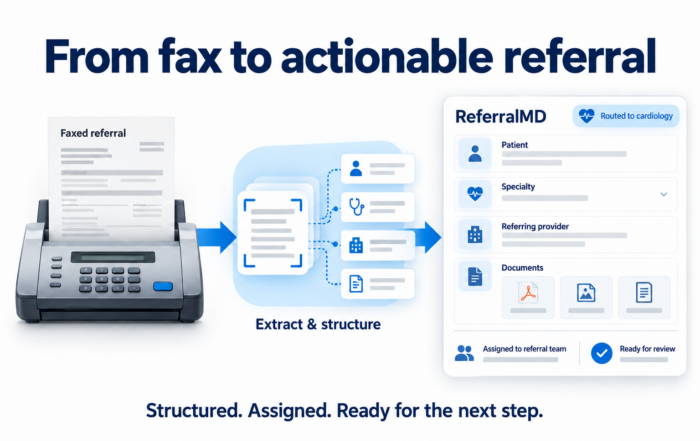
For organizations still receiving a high volume of faxed referrals, referral management software can help convert fax from a disconnected paper process into a trackable digital intake channel.

Keeping Patients In Network
Referral leakage happens when patients are referred or scheduled outside the preferred network when an appropriate in-network option is available.
This can occur for several reasons:
- Staff do not have visibility into in-network providers
- Patients are not contacted quickly enough
- Referrals are delayed or lost
- Provider availability is difficult to confirm
- Referring offices do not know where to send patients
- Scheduling workflows are inconsistent
The right referral management process helps reduce leakage by giving teams better visibility into referral destinations, provider networks, patient status, and appointment outcomes.
When organizations can route referrals based on specialty, location, insurance, affiliation, availability, or other operational criteria, they are better equipped to guide patients to the right in-network care option.
This supports:
- Better care continuity
- Stronger network utilization
- Improved appointment completion
- More consistent patient access
- Better communication with referring providers
- Clearer reporting on referral patterns and leakage
Referral management is not only an operational workflow. It is also a network strategy.
Centralizing Multiple Referral Intake Channels
One of the biggest challenges in referral management is that referrals do not arrive through a single channel.
Healthcare organizations may receive referrals through fax, online forms, scheduling requests, secure messages, connected provider accounts, or manual staff entry. A strong referral management process needs to support these different intake paths while still creating one consistent workflow.
ReferralMD supports six core referral intake methods:
1. Fax: Ported or New
Fax remains one of the most common ways healthcare organizations receive referrals. Some organizations need to keep an existing fax number by porting it into a new workflow, while others may create a new fax number for centralized referral intake.
A modern referral workflow can help convert fax from a disconnected paper process into a trackable digital intake channel.
Instead of relying on printed pages, shared folders, or manual sorting, faxed referrals can be routed into a centralized referral queue for review, assignment, and follow-up.
2. Referral Portal
A referral portal gives referring providers a structured way to submit referral information.
This can improve referral quality because the referring office can be guided to provide the necessary patient, provider, insurance, and clinical details upfront.
A referral management platform with portal-based intake can help reduce incomplete submissions, phone calls, and back-and-forth communication between referring and receiving organizations.
3. Patient Scheduling Portal: Book or Request
Patient access is a key part of referral management.
A patient scheduling solution can allow patients to either book an appointment directly or request an appointment based on provider availability, location, insurance, and other scheduling criteria.
This improves access by giving patients a more convenient way to move from referral to appointment.
It can also reduce call volume for staff and help organizations capture demand that might otherwise be lost when patients cannot easily schedule care.
For organizations focused on reducing no-shows, minimizing administrative work, and helping patients get timely care, integrated appointments and scheduling can play an important role in the referral management process.
4. Manual Add
Not every referral starts digitally.
Some referrals may come from phone calls, walk-ins, internal provider conversations, or other non-standard workflows. Manual add functionality gives staff a way to enter those referrals into the same centralized system.
This is important because it prevents “side workflows” from developing in spreadsheets, sticky notes, inboxes, or local documents.
When manually added referrals are tracked alongside digital referrals, teams get a more complete view of referral volume and patient status.
5. Other RMD Accounts
When other organizations or providers use connected RMD accounts, referrals can be exchanged more directly within the network.
This helps reduce reliance on fax, phone calls, and disconnected communication. It also improves visibility between referring and receiving organizations.
Connected referral workflows can make it easier to track who sent the referral, where it is going, what action is needed, and whether the patient has moved forward in the care journey.
6. RMD Direct Address
A Direct Address supports secure electronic exchange of healthcare information.
In referral management, Direct messaging can be used to send or receive referral-related clinical information between healthcare organizations. DirectTrust describes Direct Secure Messaging as a way to support secure and interoperable electronic communication of health information for referrals, care coordination, and other clinical communication purposes.
When referrals are received through an RMD Direct Address, organizations can bring secure referral communication into the broader referral management workflow.
The Value of a Centralized Referral Work Queue
Multiple referral intake channels are helpful only if they lead into a consistent workflow.
Without centralization, each channel becomes its own silo. Faxed referrals may be handled one way, portal referrals another way, scheduling requests somewhere else, and manually entered referrals in a separate process.
A centralized referral work queue helps teams standardize how referrals are:
- Received
- Reviewed
- Prioritized
- Assigned
- Routed
- Scheduled
- Tracked
- Closed
This consistency makes referral operations easier to manage, especially for growing practices, specialty groups, hospitals, health systems, and clinically integrated networks.
It also creates better accountability. Teams can see what came in, who is responsible, what is pending, and what still needs action.
Closing the Referral Loop
Referral management does not end when a referral is received.
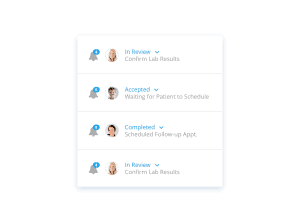
A complete referral workflow should help close the loop between the referring provider, the receiving organization, and the patient.
Closed-loop referral management helps answer important questions:
- Was the referral received?
- Was the patient contacted?
- Was the appointment scheduled?
- Did the patient attend?
- Was the referring provider updated?
- Was the referral completed or canceled?
- Is more information needed?
Closing the loop improves care coordination and reduces uncertainty for both providers and patients. It also helps organizations build stronger relationships with referral partners because referring providers can see that their patients are being managed effectively.
Better Data for Better Referral Decisions
Referral management software can also provide reporting that is difficult to achieve with manual workflows.
When referrals are tracked in a centralized platform, organizations can better understand:
- Referral volume by source
- Referral volume by specialty
- Processing time
- Appointment conversion rates
- Patient scheduling delays
- Referral leakage
- Top referring providers
- Referral status by location or department
- Incomplete referral trends
- Staff workload
This data can help leaders identify operational bottlenecks, improve staffing decisions, evaluate referral partner relationships, and strengthen network performance.
For example, referral management analytics can help organizations understand where patients may be leaving the network and where workflow changes could improve retention.
Improving the Patient Experience
Patients usually do not see the complexity behind referral workflows. They simply want to know:
- Was my referral received?
- Who will contact me?
- When can I schedule?
- What information do I need?
- Where am I supposed to go?
- What happens next?
When referral management is inefficient, patients may wait too long, call repeatedly for updates, or seek care elsewhere.
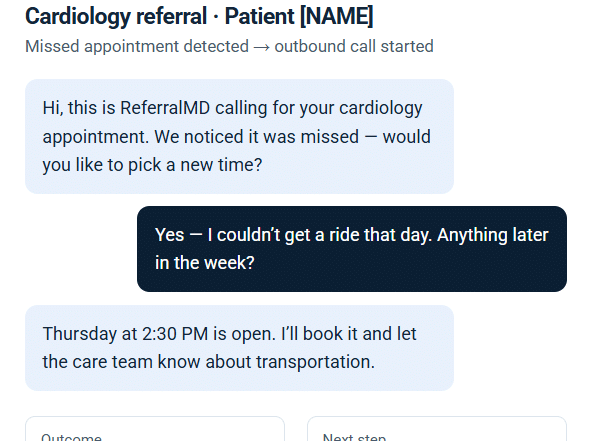
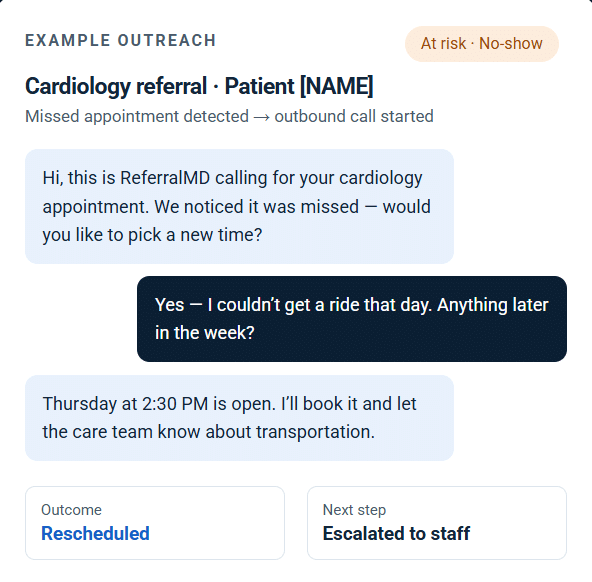
A better referral management process improves the patient experience by making the next step clearer and faster. Automated communication, scheduling support, digital intake, and better referral tracking can all help reduce confusion and improve follow-through.
A more efficient referral process also supports broader patient access goals by making it easier for patients to move from referral to appointment.
Referral Management and Interoperability
Referral workflows are closely connected to healthcare interoperability.
The Centers for Medicare & Medicaid Services has emphasized the importance of improving data exchange, reducing provider and patient burden, and keeping patients at the center of care through interoperability and prior authorization policies. CMS states that its interoperability and prior authorization final rule is intended to increase data sharing and reduce overall payer, healthcare provider, and patient burden through improvements to prior authorization and data exchange practices.
For referral management, interoperability matters because referrals often require information exchange between different systems, providers, and organizations.
A strong referral management strategy should account for:
- Secure clinical communication
- Digital referral intake
- EHR integration
- Structured referral data
- Patient access
- Closed-loop communication
- Reporting and analytics
The more connected the workflow, the easier it is to reduce manual work and improve care coordination.

What to Look for in a Referral Management Solution
When evaluating referral management software, healthcare organizations should look for a solution that supports both operational efficiency and patient access.
Key capabilities include:
- Multi-channel referral intake
- Fax management
- Referral portal functionality
- Patient scheduling tools
- Manual referral entry
- Secure messaging or Direct Address support
- Configurable workflows
- Task management
- Referral status tracking
- Provider directory or network routing
- Patient communication tools
- EHR or system integration
- Referral analytics
- Leakage reporting
- Closed-loop referral tracking
The best solution is not just a digital inbox. It should help teams manage the entire referral lifecycle.
For provider groups, specialty practices, hospitals, and health systems, ReferralMD for providers offers an example of how referrals, scheduling, intake, communications, and workflow automation can be connected in one platform.
Frequently Asked Questions About Referral Management
What is referral management?
Referral management is the process of receiving, reviewing, routing, scheduling, tracking, and closing the loop on patient referrals. It helps healthcare organizations coordinate care between referring and receiving providers.
Why is referral management important?
Referral management is important because it helps patients access care faster, reduces administrative burden, improves communication between providers, and helps organizations track referral status and outcomes.
How does referral management software reduce manual work?
Referral management software reduces manual work by centralizing referral intake, digitizing fax and portal submissions, organizing referral information, automating workflow steps, and reducing duplicate data entry.
How does referral management help keep patients in network?
Referral management helps keep patients in network by giving staff better visibility into preferred providers, specialties, locations, insurance criteria, availability, and referral status. This helps teams route patients to appropriate in-network care options.
What are common ways healthcare organizations receive referrals?
Common referral intake channels include fax, online referral portals, patient scheduling portals, manual entry, connected provider accounts, and secure Direct Address communication.
What is closed-loop referral management?
Closed-loop referral management means tracking the referral from the initial request through scheduling, appointment completion, and communication back to the referring provider.
Conclusion
Referral management is a critical part of healthcare operations, patient access, and network performance.
The right referral management solution helps organizations centralize referral intake, reduce manual data entry, improve visibility, close the referral loop, and keep patients connected to the right care.
Because referrals can arrive through many different channels, including fax, referral portals, patient scheduling portals, manual entry, connected RMD accounts, and RMD Direct Address communication, healthcare organizations need a flexible and centralized workflow.
By bringing these referral sources into one structured process, organizations can reduce administrative burden, improve patient access, support in-network care, and make referral operations more efficient from start to finish.
Related Posts


Subscribe to Our Blog
Recent Posts