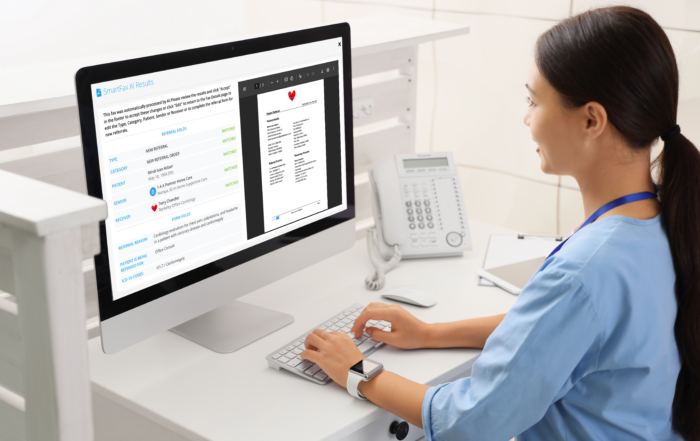
AI in mental healthcare is moving from buzzword to back-office workhorse: handling paperwork, surfacing patterns, and helping clinicians give more attention to the patient in front of them. Here’s where it’s actually delivering value, and how to roll it out without losing the human side of care.
Getting help for mental health isn’t always easy. Appointments take weeks to schedule, clinicians carry heavy caseloads, and too much energy goes to forms and documentation instead of care.
AI in mental healthcare is starting to absorb some of those roadblocks. It helps therapists, counselors, and psychiatrists free up time, spot patterns earlier, and make treatment more personal for people managing mental health conditions. Rather than replacing the human side of care, the goal is to lighten the load so providers can focus on what matters most.
Current challenges in mental healthcare
Mental health care is essential, but the system struggles to keep up. Providers and patients face a set of obstacles that make it harder to deliver and receive the right care at the right time.
- Not enough clinicians. Demand has badly outpaced supply. As of December 2025, roughly 137 million Americans live in a federally designated Mental Health Professional Shortage Area, and only about 27% of the need in those areas is currently met, according to HRSA shortage-area data. Many people wait weeks or months for an appointment, which can worsen symptoms in the meantime.
- Heavy administrative work. Clinicians spend a large share of their week on notes, forms, and records. The American Medical Association reports physicians average a roughly 58-hour work week, with a big portion devoted to documentation and administrative tasks — much of it after hours. Every hour on paperwork is an hour not spent with patients.
- Rising demand for services. Greater awareness of mental health is a good thing, but it also means more people are seeking care than the system has scaled to handle.
- Burnout among providers. Large caseloads plus documentation load drive high burnout rates, which only deepens the shortage problem.
- Gaps in follow-up and continuity. Even after treatment begins, missed appointments, limited between-session check-ins, and a lack of ongoing monitoring make it hard to keep progress on track.
How clinicians are using AI in mental healthcare
Adoption is no longer hypothetical. In a 2024 study published in JMIR Mental Health, about 43% of mental health professionals reported already using AI tools — most often for research and report writing. Here’s where it’s proving most valuable:
- Administrative work. Automating intake forms, progress notes, reports, and other clinical documentation so clinicians spend less time on paperwork and more time on patients.
- Research support. Sorting through large datasets, literature reviews, clinical trials, and global reports (such as those from the World Health Organization) to surface insights that would take a person weeks to find.
- Symptom tracking. Using apps or chat-based tools to log mood, sleep, or activity patterns between sessions, giving therapists a fuller picture.
- Early detection. Screening tools that flag possible signs of depression, anxiety, or risk through questionnaires or language patterns analyzed with natural language processing.
- Personalized treatment. Recommending interventions based on patient history, presenting symptoms, and response to prior care.
- Patient engagement. Reminders, check-ins, and digital companions — including automated patient messaging and scheduling tools — that keep people connected to care between visits, a major lever for closing follow-up gaps.
AI in mental healthcare: a roadmap for healthcare organizations
Adopting AI isn’t as simple as buying software and flipping a switch. It takes planning, testing, and a clear focus on both clinicians and patients. Organizations that succeed usually follow a few key steps.
1. Start with pilot programs that work
Jumping straight into full-scale adoption can overwhelm teams and create resistance. Small pilots let you test tools in a controlled setting, measure impact, and gather feedback from providers and patients. For example, you might start with an AI-powered symptom-tracking app before expanding into documentation or scheduling tools.
2. Build the right infrastructure
AI doesn’t work in isolation. It needs secure data systems, solid EHR integration, and well-defined workflows to be effective. The payoff comes when information moves seamlessly across departments and to external specialists — so lab results, diagnostic data, and referral status land in the patient’s record without manual chasing. A closed-loop referral platform is one way to make sure a behavioral health referral is actually completed rather than lost between offices, giving the clinician a complete view to make informed decisions without delay.
This is especially vital for a travel medical tech, who can use an AI platform to ensure that crucial lab results and diagnostic data are seamlessly integrated into a patient’s health record, allowing the mental health professional to make informed decisions without any delays.
3. Train your team for human-AI collaboration
No tool works if the people using it feel uncertain or left behind. Training should cover the basics and, more importantly, how AI fits into daily work. Clinicians need to know how to interpret AI suggestions, verify outputs, and adjust workflows — especially around clinical decision-making. This is especially relevant in the context of healthcare application development, where understanding how AI integrates into existing systems can enhance patient care. The goal is for providers to see AI as support for their judgment, not a replacement for it.
4. Keep patients at the center
The real test is whether patients feel the difference: quicker appointments, fewer forms, more personal care plans. Be transparent about how you implement tools, how you follow ethical guidelines, protect data privacy, and address algorithmic bias — and make clear that technology never crowds out the human connection during a visit. Patients are far more likely to embrace AI when they can see it making care smoother and more responsive.
Frequently asked questions about AI in mental healthcare
Will AI replace therapists and counselors?
No. AI in mental healthcare is built to assist clinicians by handling routine work like documentation, scheduling, and symptom tracking. Diagnosis, therapeutic relationships, and clinical judgment remain firmly with licensed professionals. The most effective deployments treat AI as a partner that frees up clinician time, not a substitute for human care.
Is patient data safe when using AI mental health tools?
It can be, when the tools are built for healthcare. Look for platforms that are HIPAA compliant, encrypt data in transit and at rest, maintain clear data-use policies, and undergo independent security review (such as SOC 2). Organizations should also have a plan for monitoring algorithmic bias and verifying AI outputs before they inform care decisions.
How are clinicians using AI in mental health today?
The most common uses are administrative: automating notes, intake forms, and reports. Beyond that, clinicians use AI for research support, between-session symptom tracking, early screening for conditions like depression and anxiety, personalized treatment recommendations, and patient engagement through reminders and check-ins.
How should a practice start adopting AI in mental healthcare?
Begin with a small, measurable pilot — often an administrative or symptom-tracking tool — then build the infrastructure (secure data systems and EHR integration) and train staff before scaling. Keep the patient experience as the benchmark for whether a tool is worth expanding.
Final thoughts: building smarter, more accessible mental healthcare with AI
AI has a real role to play in mental healthcare, but it works best as a partner. By handling the routine tasks that drain time and energy, it gives clinicians more room to focus on care — and patients benefit from smoother access, more personalized treatment, and fewer gaps in follow-up. The goal was never to change the heart of mental healthcare, but to support it in ways that make it stronger and more sustainable.
Not sure how to make AI work for your organization? Schedule a demo with ReferralMD and see how the platform cuts down on admin work, strengthens referrals, and keeps patients engaged.

Related Posts



Subscribe to Our Blog
Recent Posts