Referral Management Software: A 2026 Guide for Healthcare Leaders
Referral management software helps healthcare organizations capture, route, track, schedule, communicate about, and close patient referrals. The most comprehensive platforms connect these steps across departments, providers, EHRs, fax channels, patients, and payer workflows rather than treating each task as a separate process.
That distinction matters. Healthcare organizations are under pressure to improve patient access, reduce administrative work, strengthen network performance, and make referral status visible from the initial request through the completed appointment. Yet the market includes EHR-native tools, patient engagement applications, prior authorization products, intake tools, and broader referral platforms—all described with similar language.
This guide explains the major categories of healthcare referral management software, the capabilities buyers should evaluate, and when a connected, end-to-end approach may offer more value than a point solution.
Key Takeaways
- Referral management is a workflow problem, not simply a tracking problem.
- EHR referral modules, patient engagement tools, point solutions, and end-to-end platforms solve different parts of the process.
- Automation should be evaluated across intake, routing, follow-up, scheduling, communication, and closure—not by the presence of an AI label alone.
- Interoperability is essential when referrals cross EHRs, organizations, and communication channels.
- The right platform depends on referral volume, network complexity, existing systems, and the specific operational gaps an organization needs to address.
What Is Referral Management Software?
Referral management software is a healthcare workflow system used to organize and coordinate patient referrals. Depending on the platform, it may support referral intake, document processing, provider matching, routing, work queues, status tracking, prior authorization coordination, patient scheduling, automated communications, analytics, and closed-loop reporting.
The goal is not simply to record that a referral exists. The goal is to help the referral progress to the appropriate next step while giving staff, referring providers, receiving providers, and patients the visibility they need.
The federal health IT standards landscape also treats referrals as a care-coordination workflow that includes a request, status updates, and an outcome—not merely a one-time order. The Office of the National Coordinator for Health Information Technology identifies referral use cases that include specialist referrals and exchange between clinicians and community-based organizations. Review ONC referral care-coordination use cases.
Why Referral Management Has Become a Strategic Priority
Historically, referral management was often viewed as an administrative task. It now affects several strategic priorities:
- Patient access: how quickly patients move from referral to scheduled care
- Care coordination: whether referring and receiving teams can exchange the information needed to act
- Network integrity: whether patients are directed to appropriate in-network services
- Operational efficiency: how much manual work is required to process, monitor, and follow up on referrals
- Revenue performance: whether referred demand becomes completed care
- Patient experience: whether patients receive clear instructions, timely communication, and accessible scheduling options
Breakdowns may occur at intake, routing, documentation, authorization, scheduling, outreach, or follow-up. When these steps are managed in disconnected systems, staff often become the integration layer—moving information manually and checking multiple tools to determine what happens next.
Four Types of Referral Management Technology
There is no single software category that fits every organization. Buyers should first identify what type of system they are evaluating and which part of the referral lifecycle it is designed to manage.
1. EHR-Native Referral Tools
Most electronic health records include functionality for initiating and documenting referrals.
Common strengths:
- Embedded in the clinical workflow
- Familiar to clinicians already using the EHR
- Connected to the patient chart
Common limitations:
- Limited visibility after a referral leaves the originating organization
- Inconsistent support for external providers using different EHRs
- Minimal automation for follow-up, escalation, and exception handling
- Limited network-wide reporting
EHR-native tools may be sufficient for straightforward internal workflows. Organizations with multiple EHRs, external partners, centralized access teams, or high referral volumes may need an operational layer that extends beyond one clinical system.
ReferralMD’s EHR integration and interoperability approach is designed around standards-based exchange using HL7, FHIR, and APIs so referral workflows can span disparate systems without requiring every participant to use the same EHR.
2. Patient Engagement and Digital Access Platforms
Patient engagement platforms focus on digital communication, scheduling, intake, reminders, and self-service experiences.
Common strengths:
- Improved patient communication
- Online scheduling and self-service options
- Digital intake and reminders
Common limitations:
- May begin only after a referral has already been processed
- May not manage provider-to-provider referral workflows
- May lack referral-level routing, work queues, and closure reporting
The most useful patient engagement capabilities are connected to the referral record. For example, patient engagement and self-service workflows can guide a patient from referral through scheduling and intake, while patient self-scheduling can give patients direct access to available appointment times.
3. Point Solutions for Intake, Prior Authorization, or Eligibility
Point solutions are designed to address a clearly defined workflow, such as fax intake, document classification, eligibility verification, or prior authorization.
Common strengths:
- Deep functionality for a narrow use case
- Focused implementation scope
- Potentially rapid improvement at a specific bottleneck
Common limitations:
- Additional integration and vendor-management requirements
- Fragmented staff experience across multiple systems
- Limited visibility into upstream and downstream referral steps
Prior authorization deserves particular scrutiny because regulatory and interoperability requirements are changing. The Centers for Medicare & Medicaid Services’ Interoperability and Prior Authorization Final Rule is intended to improve data exchange and reduce burden through electronic prior authorization requirements for impacted payers. Read the CMS rule overview.
A purpose-built authorization platform may be appropriate when prior authorization is the dominant problem. When authorization delays are intertwined with intake, scheduling, documentation, and referral status, buyers should also consider how the authorization workflow connects to the broader referral process.
4. End-to-End Referral Management Platforms
End-to-end platforms treat referrals as a connected operational workflow. They may combine:
- Multichannel referral intake
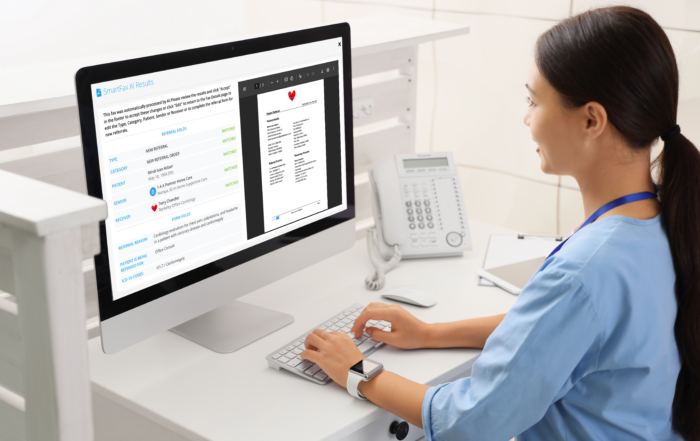
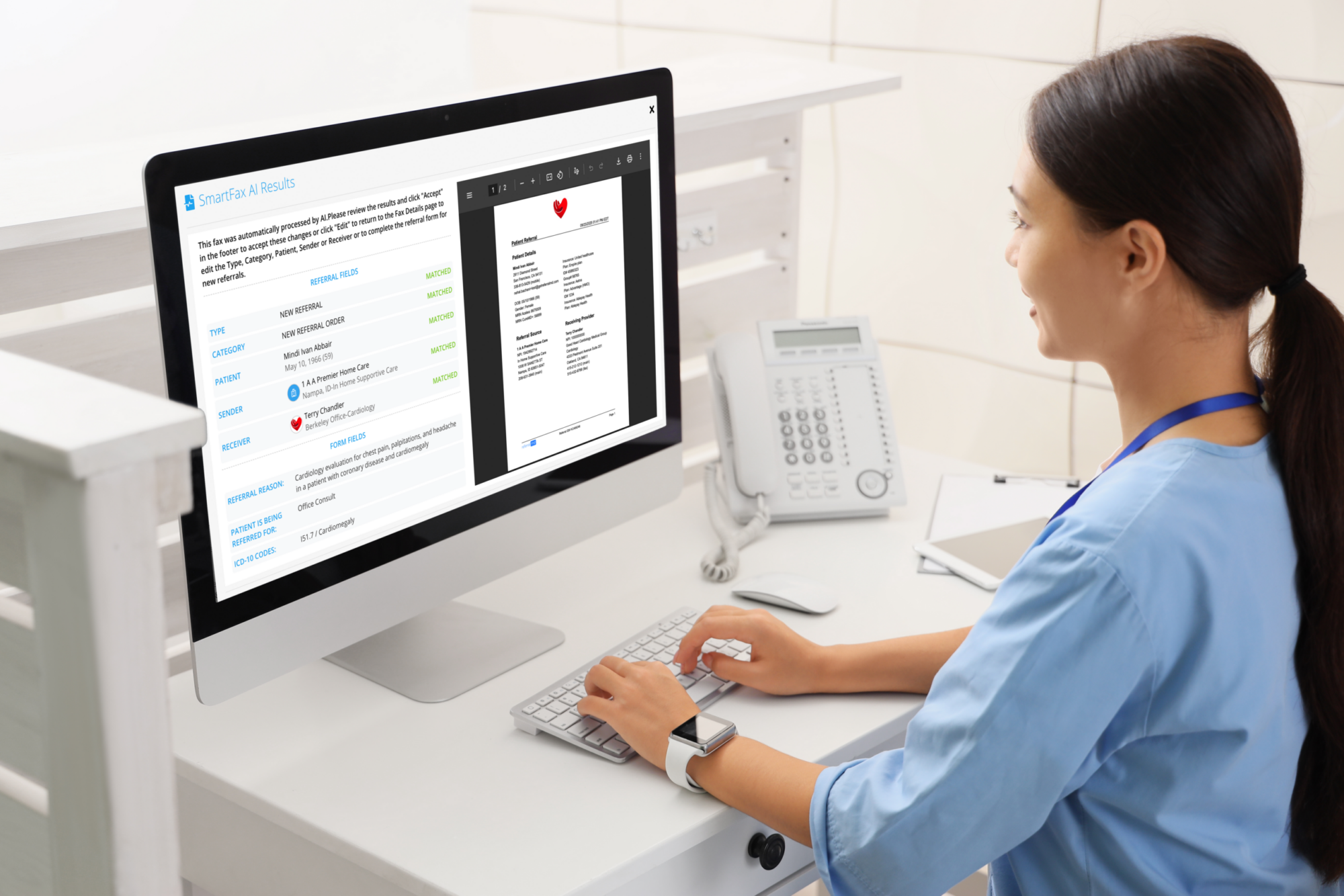
- Fax and document processing
- Referral routing and provider matching
- Configurable work queues and tasks
- Status tracking and alerts
- Patient scheduling and communications
- Prior authorization coordination
- Provider communication
- Closed-loop reporting and analytics
- EHR and external-system interoperability
The primary advantage is continuity. Instead of automating one isolated task, the platform coordinates the handoffs between tasks and shows where each referral stands.
This is the model behind ReferralMD’s connected referral workflows for providers: referral intake, tracking, scheduling, patient intake, fax management, e-consults, and communication are managed as related parts of the same process.
What Features Should Referral Management Software Include?
A useful evaluation should focus on operational capabilities and measurable workflow outcomes rather than broad product labels.
Multichannel Referral Intake
Healthcare organizations receive referrals through fax, portals, Direct messaging, EHR interfaces, online scheduling, phone calls, and manual entry. A platform should centralize these channels without forcing staff to maintain separate tracking processes.
Workflow Automation and Exception Management
Automation should move routine work forward while drawing staff attention to exceptions. Buyers should ask whether the system can:
- Classify and route incoming referrals
- Assign tasks based on referral type, location, specialty, or urgency
- Trigger follow-up when a referral stalls
- Escalate missing information or unresponsive patients
- Advance status when defined requirements are met
- Maintain an auditable history of actions and communications
Artificial intelligence may improve document processing, classification, data extraction, routing, and communication. However, buyers should evaluate the specific workflow being automated, the human-review process, integration requirements, and the operational outcome—not simply whether a product is described as AI-powered.
Real-Time Referral Tracking
A referral tracking system should answer basic operational questions without requiring manual research:
- Was the referral received?
- Is required information missing?
- Who owns the next action?
- Has the patient been contacted?
- Is authorization pending?
- Has the appointment been scheduled?
- Was the appointment completed?
- Was the outcome returned to the referring provider?
Patient Scheduling, Intake, and Communication
Patient engagement should help the referral progress. Useful capabilities include self-scheduling, reminders, digital forms, consent collection, status updates, and two-way communication tied to the referral.
ReferralMD’s automated patient engagement workflows connect communication to referral creation, scheduling, intake, and follow-up rather than treating messaging as a separate campaign.
Interoperability Across EHRs and Organizations
Referral workflows frequently cross organizational and technical boundaries. Buyers should assess support for standards such as HL7, FHIR, Direct secure messaging, APIs, and clinical document exchange.
Interoperability should do more than move a document. It should support the status, ownership, and next action required to keep the referral moving. ReferralMD’s integrated EHR referral workflows use its SmartEXCHANGE interoperability layer to connect operational referral steps with external systems.
Network Management and Referral Leakage Visibility
Health systems, ACOs, CINs, and multi-site groups need visibility into where referrals are sent, whether patients schedule, and where workflows break down. A system should support provider directories, network rules, destination matching, and reporting that identifies preventable leakage.
Analytics That Support Action
Dashboards should help leaders identify what to change. Relevant measures may include:
- Referral volume by source, specialty, and destination
- Time from receipt to first action
- Time from referral to scheduled appointment
- Referral completion rate
- Reasons referrals cannot be completed
- Work queue age and staff workload
- In-network and out-of-network referral patterns
- Patient response and no-show rates
How ReferralMD Approaches Referral Management Differently
ReferralMD is designed as a referral operating platform rather than a single-purpose tracking or communication tool. Its differentiation is not that every organization needs every feature. It is that organizations can coordinate multiple referral-related workflows within one operational framework.
That framework includes:
- Connected intake: centralizing referrals from fax, portals, Direct, integrations, scheduling, and manual entry
- Workflow automation: configurable routing, alerts, tasks, and status progression
- Patient access: linking referrals to scheduling, intake, reminders, and patient communication
- Interoperability: connecting multiple EHRs and external systems through standards-based exchange
- Closed-loop visibility: tracking referral activity through appointment and outcome
- Scalable adoption: offering core referral management for practices while supporting enterprise integrations and workflow complexity
For organizations evaluating deployment and cost models, ReferralMD publishes its referral management pricing and plan structure. Smaller practices can also start with a free ReferralMD account, while health systems can evaluate enterprise workflows, integrations, and implementation requirements.
Point Solution or End-to-End Platform: Which Is the Better Fit?
A point solution may be the right choice when:
- One workflow is clearly responsible for most delays or cost
- The organization already has reliable systems for the other referral steps
- The integration scope is manageable
- Specialized depth matters more than workflow consolidation
An end-to-end platform may be the better choice when:
- Staff use multiple tools and spreadsheets to manage one referral
- Referral status is difficult to determine across teams or locations
- Intake, scheduling, communication, and follow-up are disconnected
- Multiple EHRs or external provider networks are involved
- Leadership lacks consistent referral-performance data
- The organization wants to reduce the number of operational handoffs and vendors
Questions to Ask Referral Management Software Vendors
- Which referral steps does the platform manage natively?
- Which capabilities require a third-party product or custom integration?
- How are fax, portal, Direct, EHR, and manually entered referrals consolidated?
- What actions are automated, and where is human review required?
- Can workflows be configured by specialty, location, referral type, urgency, or payer?
- How does the system identify and escalate stalled referrals?
- How are patients scheduled and contacted?
- How does the platform exchange data with different EHRs?
- Can referring providers see status and receive outcomes?
- Which metrics are available without custom reporting?
- How are AI-generated classifications or extracted data validated?
- What implementation, security, compliance, and change-management resources are required?
The Future of Referral Management Technology
The market is moving toward greater automation, more structured data exchange, and tighter coordination between clinical, administrative, and patient-facing workflows. Important developments include:
- AI-assisted document intake and classification
- Standards-based electronic prior authorization
- Patient self-service tied directly to referral status
- Cross-EHR referral workflow orchestration
- More precise network and leakage analytics
- Automation that identifies exceptions instead of merely creating more tasks
The strongest platforms will not be defined solely by the number of features they offer. They will be defined by how effectively those capabilities work together to move patients toward appropriate care.
Frequently Asked Questions About Referral Management Software
What is referral management software?
Referral management software helps healthcare organizations capture, route, track, schedule, communicate about, and close patient referrals. More comprehensive platforms also support intake, workflow automation, interoperability, analytics, and network management.
What is the difference between referral management software and an EHR referral module?
An EHR referral module usually initiates and documents referrals within the EHR. Referral management software typically adds cross-network intake, routing, status tracking, patient communication, scheduling coordination, exception management, and reporting across the full referral lifecycle.
What features should healthcare organizations look for?
Important features include multichannel referral intake, workflow automation, intelligent routing, real-time tracking, patient scheduling and communication, prior authorization coordination, EHR interoperability, analytics, role-based work queues, and closed-loop reporting.
How can referral management software reduce referral leakage?
It can reduce leakage by making referral status visible, routing patients to appropriate in-network providers, identifying stalled referrals, automating follow-up, and measuring where referrals are delayed, abandoned, or sent outside the network.
Does referral management software replace an EHR?
No. It typically complements the EHR by coordinating referral workflows that cross departments, provider organizations, communication channels, and external systems. Standards-based integration can keep clinical and operational data synchronized.
Is a point solution or an end-to-end referral platform better?
The better choice depends on the organization. A point solution may be appropriate for one clearly defined bottleneck. An end-to-end platform may be a better fit when the primary challenge is fragmentation across intake, routing, authorization, scheduling, communication, tracking, and reporting.
Final Thoughts
Choosing referral management software requires more than comparing feature lists. Healthcare leaders should examine the complete referral journey, identify where information or ownership is lost, and determine whether the organization needs a specialized tool or a connected operational platform.
The central question is straightforward: Can the system help every referral move from request to appropriate care while giving staff, providers, patients, and leaders the visibility they need?
Explore a Connected Referral Workflow
Learn how ReferralMD connects referral intake, workflow automation, patient access, interoperability, and closed-loop tracking in one platform.
Related Posts


Subscribe to Our Blog
Recent Posts